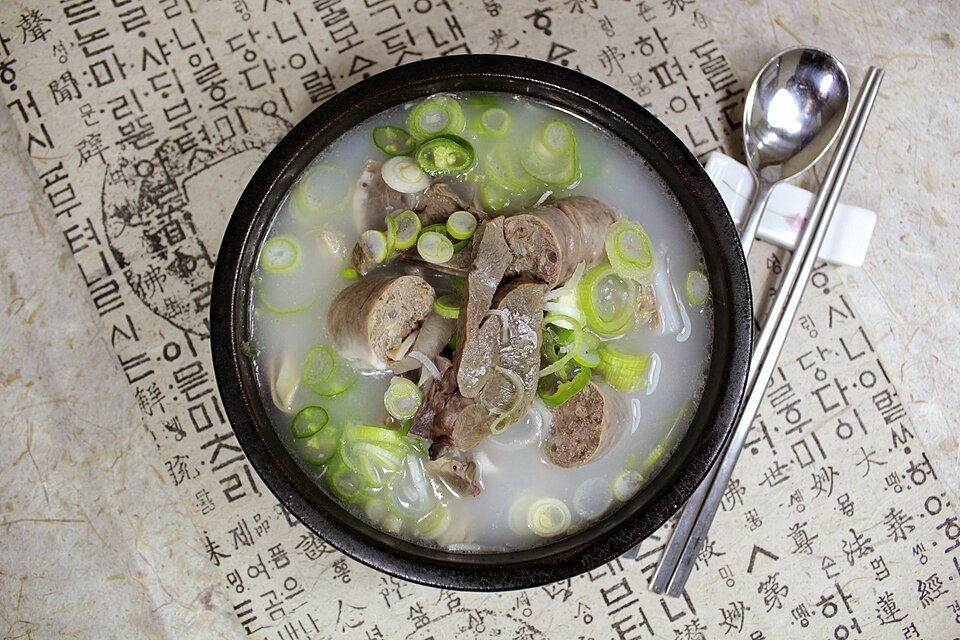
Haejangguk (해장국) is what Koreans eat the morning after drinking: a hot soup meant to settle the stomach. The name covers a whole category rather than one recipe, and the bowl you get changes from city to city. Here is what Koreans actually order, one 1937 Seoul shop where you can try the classic, and a simple way to eat it that most visitors never hear about.
Jay’s take: soup first, but not only soup
This section comes from Jay, who runs this blog and answered a few questions about the topic in Korean. Here is what he said, translated:
- Haejangguk and kongnamul-guk (bean sprout soup): these are the bowls people say “soothe the stomach.”
- Hamburgers and pizza: some people who like rich, greasy food go for these instead.
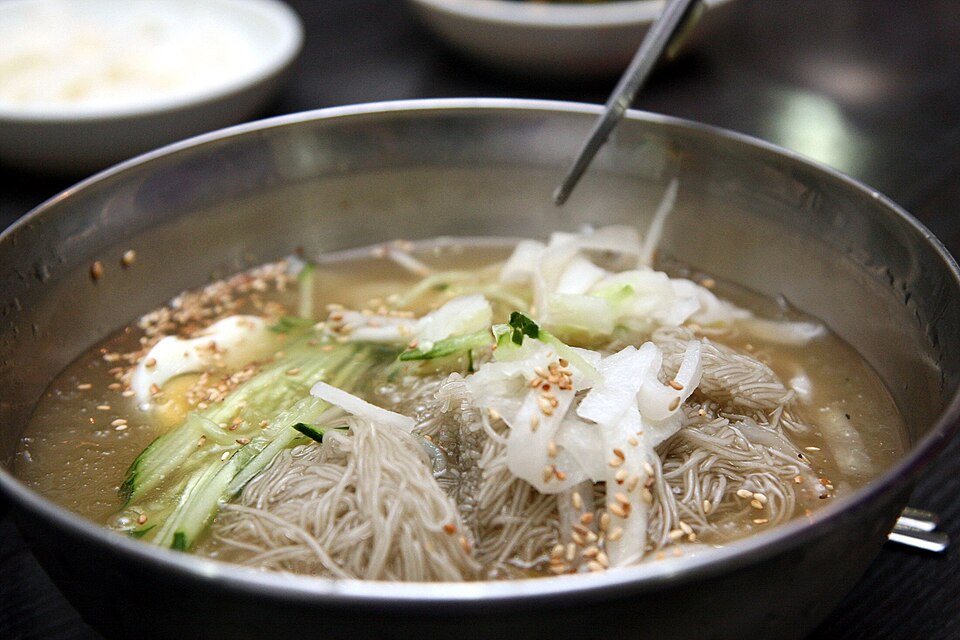
- Naengmyeon and kongguksu: plenty of Koreans prefer cold broth and noodles to cure a hangover.
- In Ho Chi Minh City: he eats pho instead.
A larger survey points the same way. According to a 2023 Lotte Members survey cited by Korea JoongAng Daily in May 2025, soups took the top three spots among hangover cures and more than half of answers, with pollock soup, bean sprout soup and sundae-guk (blood sausage soup) leading, followed by spicy options such as ramyeon and jjamppong.
Haejangguk is a category: six regional bowls
Korea JoongAng Daily lists the regional versions found across the country. Seoul’s classic is built on beef bones, and the others use whatever the local table offers.
| Style | Korean | Main ingredient | Known for |
|---|---|---|---|
| Seoul seonji haejangguk | 선지해장국 | Beef bone broth, napa cabbage, radish, bean sprouts, congealed ox blood | Cheongjin-dong in Jongno |
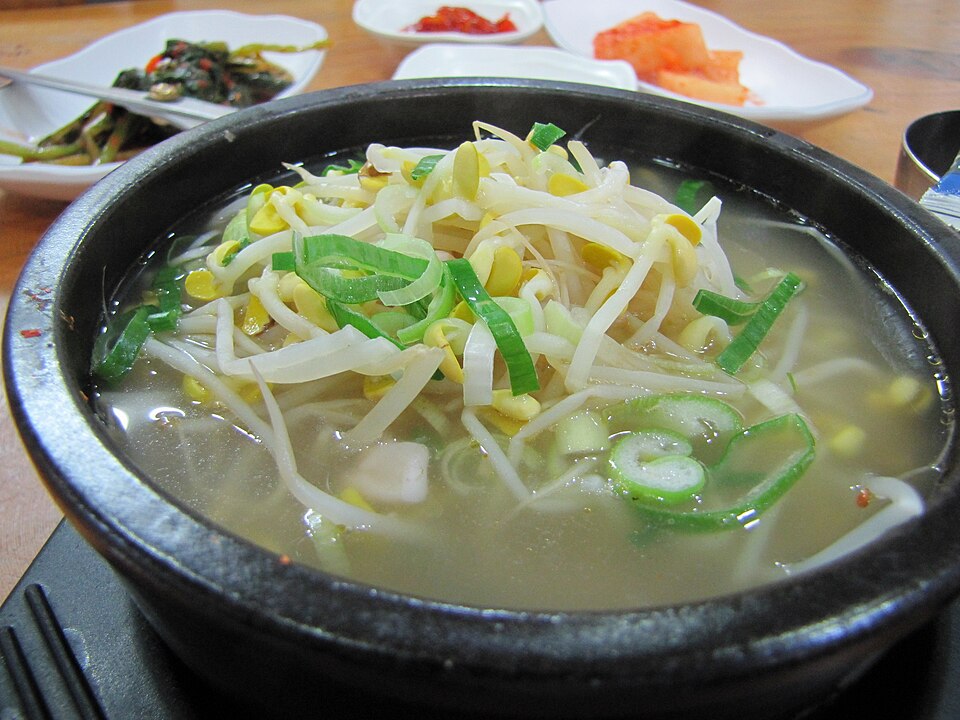
| Kongnamul gukbap | 콩나물국밥 | Bean sprouts in hot broth, served with rice | Jeonju, born in Nammun Market |
| Dwaeji gukbap | 돼지국밥 | Pork soup with rice | Busan |
| Bukeo-guk / hwangtae haejangguk | 북어국 / 황태해장국 | Dried pollock | Gangwon Province, including Sokcho |
| Jaecheop-guk | 재첩국 | Small corbicula clams | Seomjin River area |
| Olgaengi-guk | 올갱이국 | Marsh snails | Chungcheong Province |
The idea is old. The Encyclopedia of Korean Culture traces the prototype to a late Goryeo Chinese-language textbook, the Nogeoldae, which mentions a “sobering soup” (seongju-tang), and notes a Sin Yun-bok tavern painting that shows a landlady ladling out soup. The Seoul style it describes is a soybean-paste soup with bean sprouts, radish, cabbage and ox blood, and Cheongjin-dong was the famous address for it.
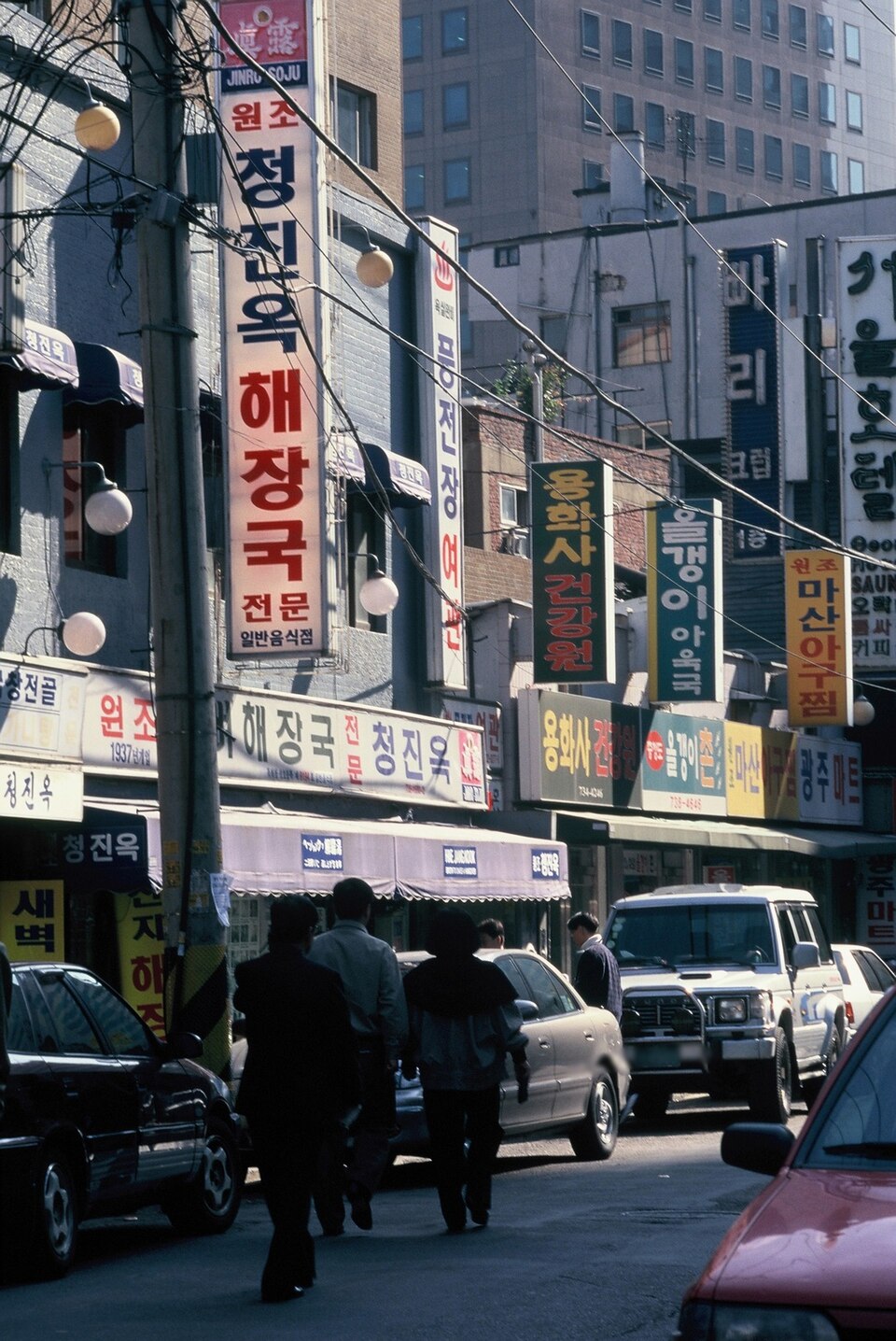
Cheongjinok: the Jongno classic since 1937
Cheongjinok (청진옥) is the shop most often named for Seoul-style haejangguk. According to its own history page, it started when a woman known as Grandma Lee Gan-nan set up a pot at the old Cheongjin-dong wood market for woodcutters coming over the Muakjae pass. It has been run by three generations of the same family, was named a Seoul Future Heritage site in 2013, and was chosen as a Seoul “Old Shop” in 2024. The Seoul Metropolitan Government describes the same origin: the first stalls sold hangover soup to the merchants of the wood market.
| Detail | What the sources say |
|---|---|
| Address | 32 Jong-ro 3-gil, Jongno-gu, Seoul (official site). Some English directories list 19 Jong-ro 3-gil, so check the map pin. |
| Getting there | About 5 minutes on foot from Gwanghwamun Station (Line 5, Exits 2 and 3) or Jonggak Station (Line 1, Exit 1), per the official site |
| Hours | Official site: 6 a.m. to 10 p.m. The VisitKorea listing shows 6:00 to 21:30 with last order at 21:00. Google Maps showed a 10 p.m. close on Nov 10, 2026. Allow for a gap and arrive before 9 p.m. |
| Price | Regular bowl about 12,000 won and special bowl about 15,000 won in Korean blog posts from Aug 2025 and a Dec 2025 TV roundup; confirm on the menu |
| What is in it | Beef bone broth, congealed ox blood, beef intestines, greens and bean sprouts; a chili paste (dadaegi) is served on the side so you can change the broth |
A cheaper bowl and a more cautious one
Cheongjinok is a heritage meal, and prices in Seoul keep rising. Korea Consumer Agency data reported by Newdaily on Aug 30, 2026 put Seoul’s July average for naengmyeon at 12,692 won and kalguksu at 10,038 won. A Korean food blog from Oct 9, 2026 found a bone haejangguk for 9,000 won and kongnamul gukbap for 8,000 won at Juyawang Gamjatang near Nonhyeon Station, which the writer said is open 24 hours. Hours and prices change, so treat these as a guide.
| Bowl | Price in the source | Best for |
|---|---|---|
| Cheongjinok seonji haejangguk (regular / special) | about 12,000 / 15,000 won | The historic Seoul version, with ox blood and offal |
| Juyawang Gamjatang bone haejangguk, Nonhyeon | 9,000 won (blog, Oct 2026) | A pork-bone version at a lower price |
| Kongnamul gukbap, same shop | 8,000 won (blog, Oct 2026) | A clear bean sprout soup with no blood or offal |
| Naengmyeon, Seoul average (July 2026) | 12,692 won (Korea Consumer Agency) | Cold noodles instead of hot soup |
If blood and offal are a hard no, kongnamul gukbap is the easiest first bowl. It is clear and mild, and it is the style Korea JoongAng Daily describes as a Jeonju hangover standard.
How to eat it, the way a Korean friend would tell you
Jay’s tip for foreigners is the part guides usually skip. Follow these steps:
- When the bowl arrives, scoop the solid ingredients out into a separate dish first and eat them while you taste the broth on its own.
- Take your time with the broth. It is the point of the meal.
- If you still need more food, put rice into the broth and eat it together.
Kkakdugi (cubed radish kimchi) is the usual side, as Korea JoongAng Daily notes. If you want heat, add dadaegi a little at a time instead of stirring in all of it.
When Koreans want something cold
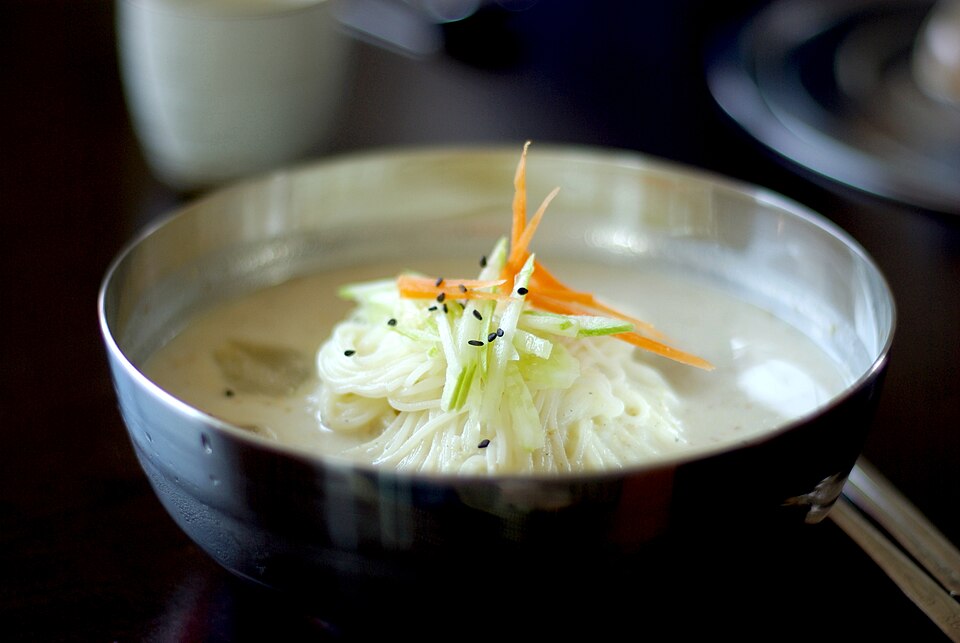
Jay’s list included cold noodles, and that is real. Naengmyeon and kongguksu both come with icy broth, which is why some Koreans choose them over a boiling pot.
Phrases to order
| English | Korean | Romanization |
|---|---|---|
| One haejangguk, please | 해장국 하나 주세요 | haejangguk hana juseyo |
| One bean sprout rice soup, please | 콩나물국밥 하나 주세요 | kongnamul gukbap hana juseyo |
| Chili paste on the side, please | 다대기 따로 주세요 | dadaegi ttaro juseyo |
| Can I have more rice? | 밥 한 공기 더 주세요 | bap han gonggi deo juseyo |
| Less spicy, please | 덜 맵게 해 주세요 | deol maepge hae juseyo |
Which one to pick
- You want the classic Seoul story: Cheongjinok, and go before the evening.
- You want something mild: kongnamul gukbap.
- You want to spend less: a gamjatang or gukbap place like the Nonhyeon example.
- You do not want a hot bowl: naengmyeon or kongguksu.
Info last checked: November 10, 2026 (sources: Cheongjinok official site, VisitKorea listing, Seoul Metropolitan Government, Korea JoongAng Daily, Encyclopedia of Korean Culture, Newdaily, Google Maps). Prices and hours change, so confirm before you go.
Keep exploring: what a Korean eats first back in Seoul, kimchi-jjim and kimjang season, Korean winter street snacks and the Seoul Food Markets Guide. More about this blog: About SeoulBites.
Source for the Cheongjin-dong history: Seoul Metropolitan Government, Cheongjin-dong Haejang-guk.


Leave a Reply