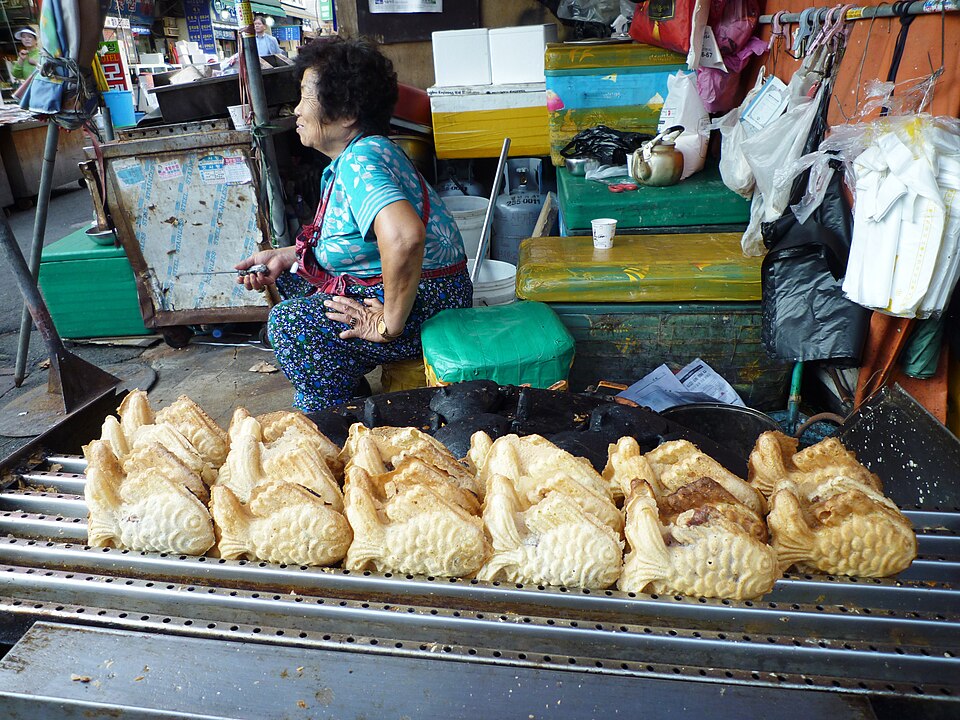
Korean winter street snacks come out from about November, and the ones Koreans crave are not the trendy ones. They are bungeoppang, hotteok, eomuk skewers, tteokbokki and sundae, eaten standing up in the cold. This guide covers what each costs this season, why bungeoppang got so expensive, and how to order without guessing.
- Season: street carts for bungeoppang, hotteok and roasted sweet potatoes mostly run from November to early March, according to Seoul Window’s winter food guide.
- Typical spend: most snacks land between 1,000 and 6,000 won, so a warm-up round of two or three items costs about 6,000 to 10,000 won.
- Where: subway exits, markets such as Gwangjang and Mangwon, and busy street corners.
- Info last checked: November 3, 2026 (sources: Seoul Economic Daily, Money Today, Newspim, Seoul Window, Seoul Sunbae).
Jay’s take: wait for it and eat it on the spot
I asked Jay, who is Korean, which winter street snacks come to mind. His list was street tteokbokki, odeng (eomuk), sundae and hotteok. The two he misses most in Ho Chi Minh City are hotteok and sundae.
His advice for foreigners was short: street food tastes best when you wait for it and eat it right there, the moment it comes out. That is the one rule worth following. A bungeoppang or hotteok that has sat in a paper bag for ten minutes is a different food from one handed over hot.
What do the winter snacks cost this season?
The numbers below are ranges from recent Korean and English price reports, not a fixed menu. Stalls set their own prices, so look at the board before you order.
| Snack | Korean | Typical price | What to know |
|---|---|---|---|
| Bungeoppang | 붕어빵 | 1,000 won each at most Seoul carts; 1,500 in Gangnam or Hongdae | Some carts still sell 3 for 2,000. Franchise shops can charge 2,500 each. |
| Hotteok | 호떡 | About 1,500 to 3,000 won | Brown sugar filling is molten. Bite a small hole first. |
| Eomuk (fish cake skewer) | 어묵 | 1,000 to 1,500 won a skewer | Broth is usually free. Keep count of your skewers. |
| Tteokbokki | 떡볶이 | About 3,500 to 5,000 won a portion | A portion shared by two is normal. Ask for less spicy if needed. |
| Sundae (blood sausage) | 순대 | About 4,000 to 6,000 won | Comes with salt or a dipping mix. Often ordered next to tteokbokki. |
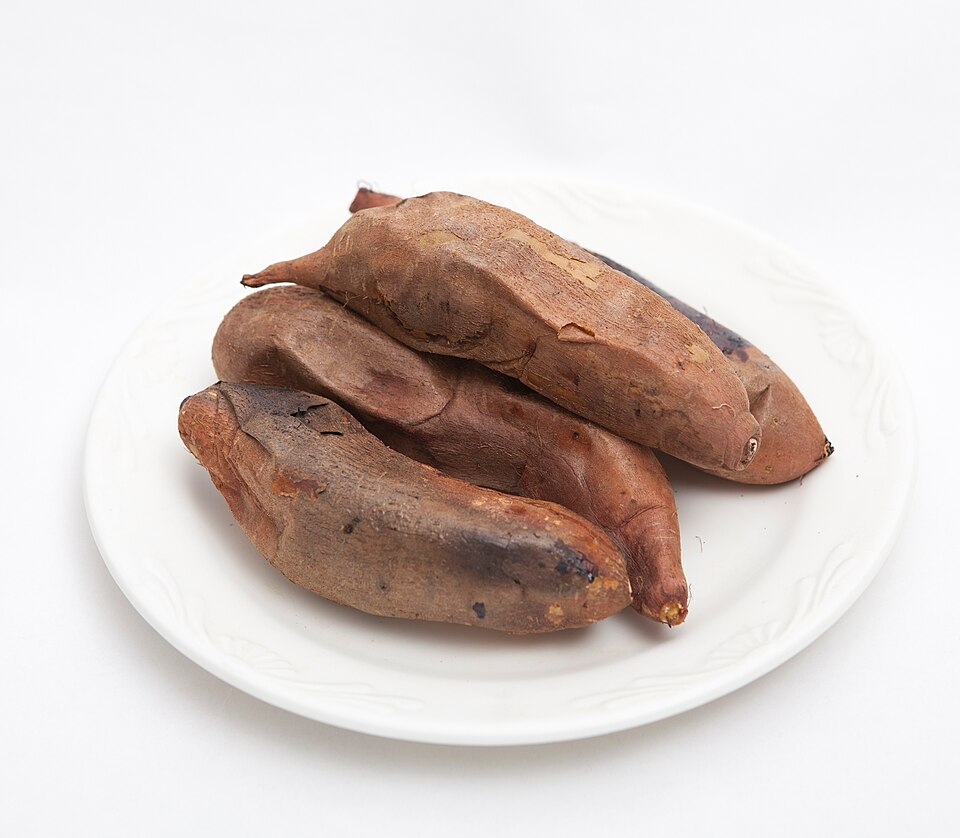
| Roasted sweet potato | 군고구마 | By size or bag at carts; about 2,000 won instant ones at convenience stores | Convenience stores now sell them almost year round. |
Sources for the figures: Seoul Economic Daily (February 6, 2026) for bungeoppang at about 1,000 won each and 1,500 in busy districts, Money Today on Daum (January 20, 2026) for a Gwangjin-gu cart still selling 3 for 2,000 won, Newspim (January 5, 2026) for hotteok rising to about 2,000 won with cheese versions at 3,500, and Seoul Sunbae (October 26, 2026) for eomuk and tteokbokki cart prices.
Why did bungeoppang get so expensive?
Korean media coined the word bungflation (붕플레이션) for it. Seoul Economic Daily reported on December 11, 2025 that domestic red bean prices were 721,800 won per 40 kg, up 33.8 percent in a year, while flour, sugar and the LPG gas stalls burn all rose too. The old standard of 3 for 1,000 won is gone.
Food Beverage News reported in January 2026 that this is pushing shoppers toward frozen bungeoppang for the air fryer and toward convenience-store roasted sweet potatoes, where CU’s sales grew about 26 percent in the first eight months of 2025. For a visitor, the practical result is simple: carts exist, but fewer of them, so grab one when you see it instead of planning to come back.
Red bean is the traditional filling. Many carts also offer custard cream; ask which one is made fresh that day by saying pat-iyo (팥이요, red bean) or syukrim-iyo (슈크림이요, custard).
Hotteok, eomuk, tteokbokki and sundae: how to order
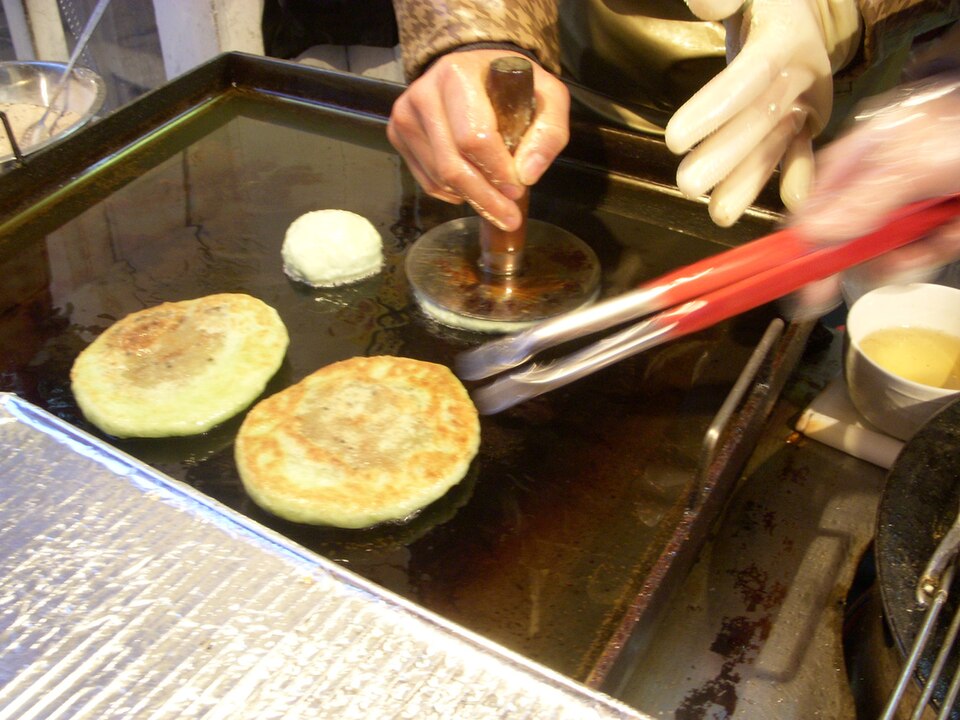
Hotteok is pressed flat on a griddle and filled with brown sugar and nuts or seeds. Let it cool for a minute. It is the snack most likely to burn your mouth.
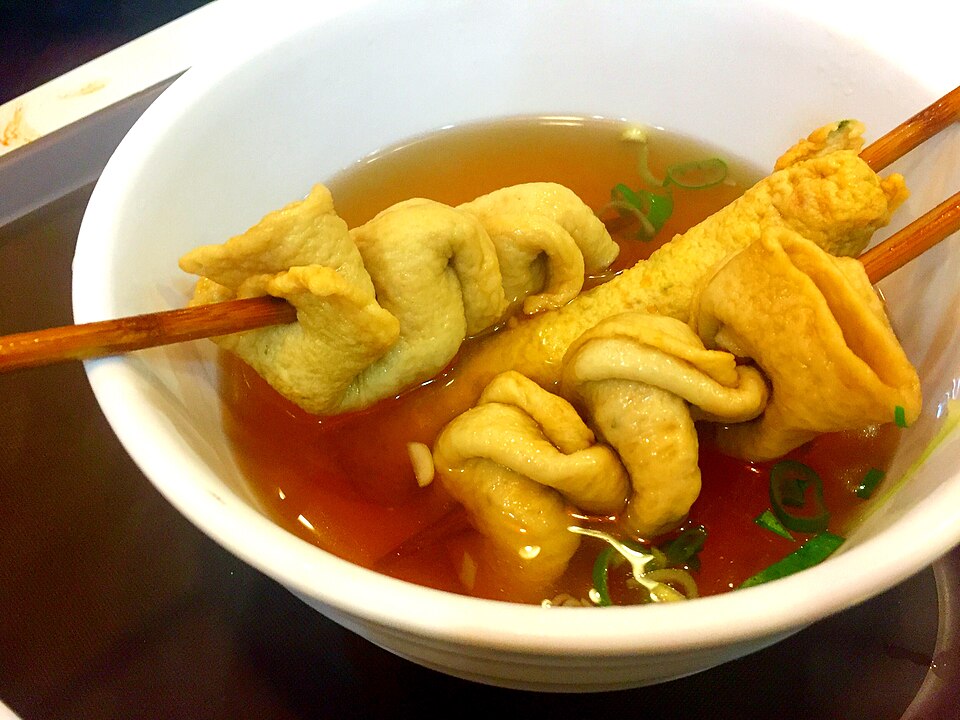
Eomuk works on the honor system at many carts: pick skewers from the pot, sip the free broth from a paper cup, and tell the vendor how many you ate when you finish.
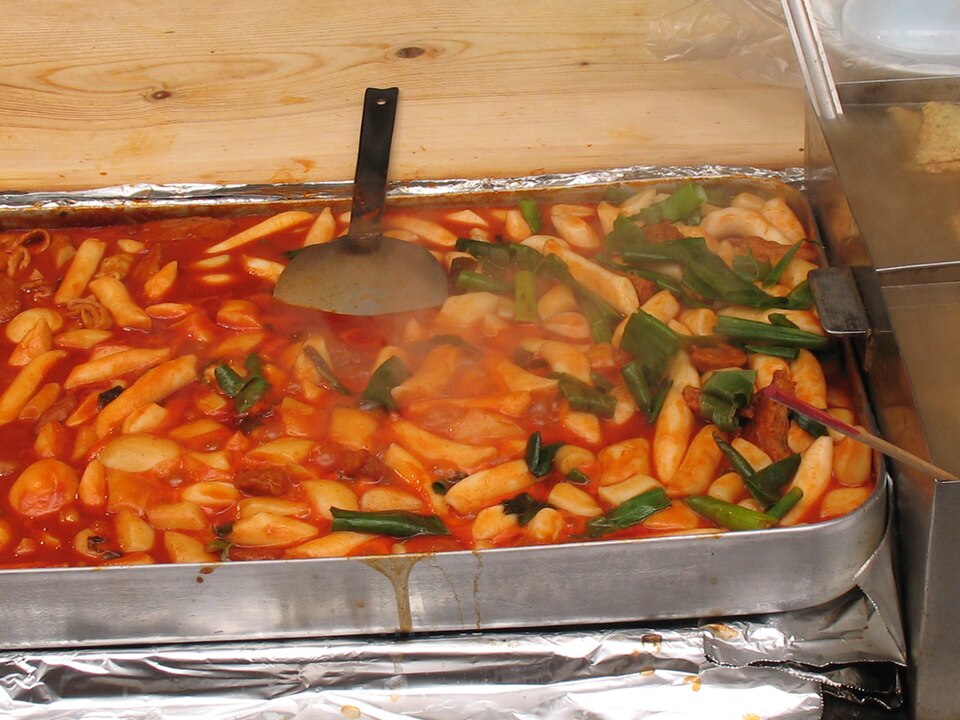
Tteokbokki and sundae are usually sold from the same stall, so order both and share. Markets like Gwangjang and Mangwon are good places to find them; for something warm and sit-down instead, try Namdaemun Kalguksu Alley.
Korean phrases for the cart
| What you want | Say this | Romanization |
|---|---|---|
| Order one | 하나 주세요 | hana juseyo |
| Ask the price | 얼마예요? | eolmaeyo? |
| Less spicy tteokbokki | 덜 맵게 해주세요 | deol maepge haejuseyo |
| I will eat it here | 여기서 먹고 갈게요 | yeogiseo meokgo galgeyo |
| Take it to go | 포장해 주세요 | pojanghae juseyo |
Cash is the safest choice at small carts. Some now accept cards or transfer, but do not count on it.
Which snack should you pick?
- You want something sweet and hot: bungeoppang or hotteok, eaten at the cart.
- You want to warm up cheaply: an eomuk skewer or two and a cup of broth.
- You want a small meal: tteokbokki plus sundae, shared.
- You cannot find a cart: a convenience-store roasted sweet potato is a real fallback, not a downgrade.
Whichever you choose, follow Jay’s rule: wait for it, and eat it where you stand.
Keep exploring: Gwangjang Market food guide, Mangwon Market food guide, Namdaemun Kalguksu Alley, and About SeoulBites.


Leave a Reply