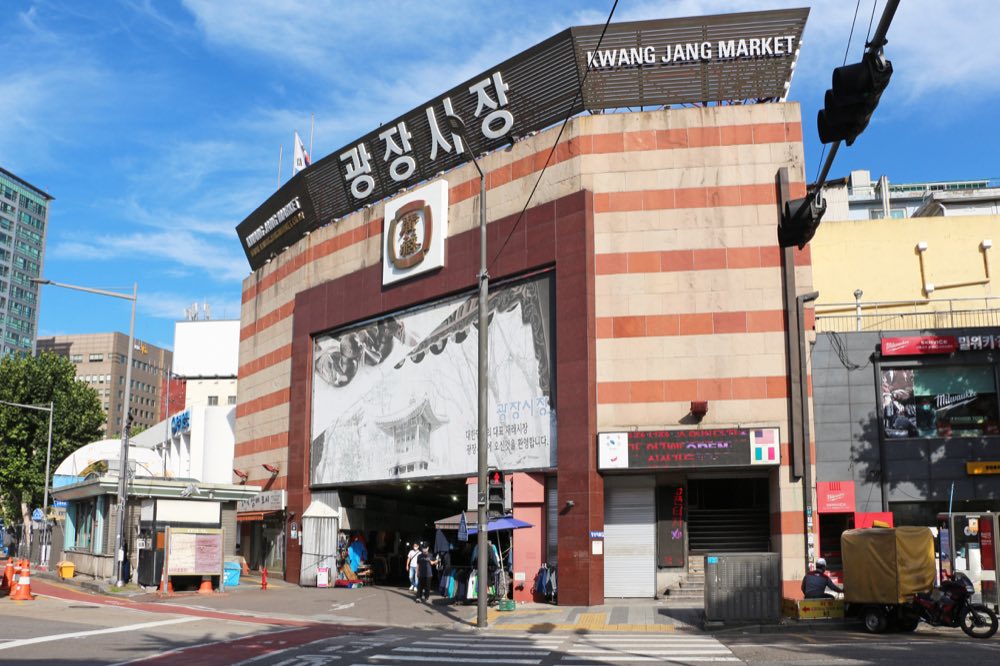
Gwangjang Market is the single best place in Seoul to eat your way through Korean street food history, and it’s the kind of spot that turns a quick photo stop into a two-hour feast. Opened in 1905 as Korea’s first permanent market, this Jongno-gu institution shot to global fame after Netflix’s Street Food: Asia spotlighted a hand-cut noodle vendor working inside its food alley, and the market has also turned up on the variety show Running Man. If you only have room in your Seoul itinerary for one food destination, this guide breaks down exactly what to order, where each stall is, and how to get there without wasting your appetite on the wrong corner of the market.
What Makes Gwangjang Market Worth the Trip
Gwangjang Market began in 1905 as a wholesale trading center for textiles, dried goods, and produce, and parts of it are still a genuine working market rather than a tourist set piece. The upper floors are packed with fabric shops, hanbok tailors, and secondhand clothing stalls, but it’s the ground-floor food alley that draws the crowds now, especially since Netflix’s Street Food: Asia turned a spotlight on it. Expect narrow lanes, sizzling griddles, vendors calling out for your attention, and a genuinely chaotic, unmissable atmosphere that’s very different from a polished food court.
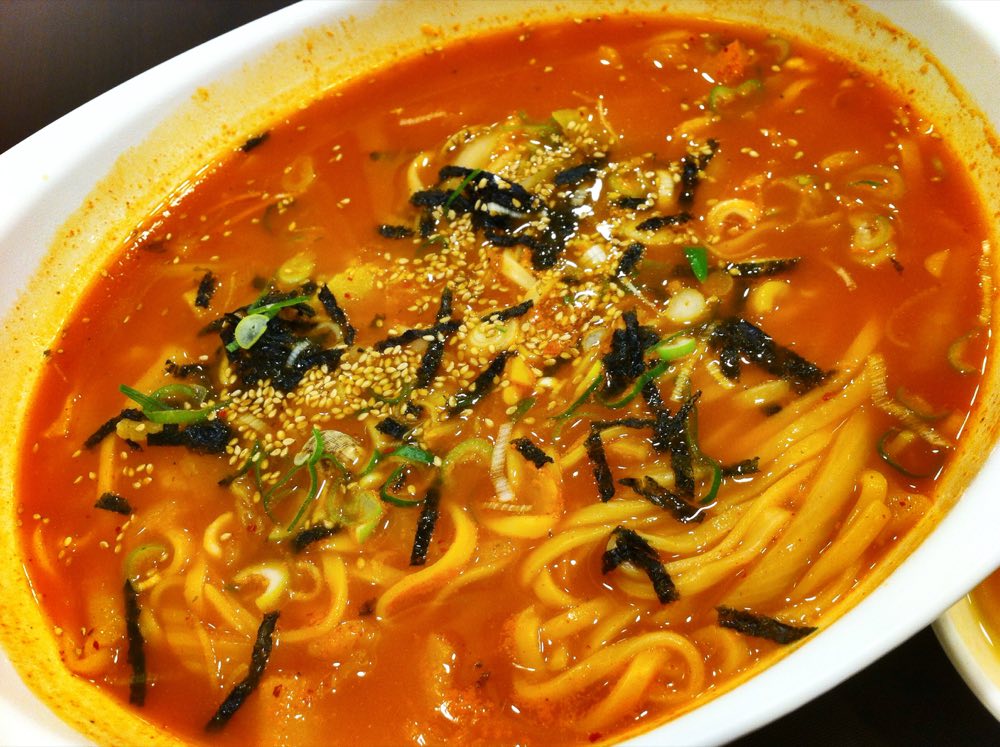
Cho Yonsoon’s Netflix-Famous Knife-Cut Noodles (Gohyang Kalguksu)
The market’s biggest food-tourism draw is Gohyang Kalguksu, the hand-cut noodle stall run by Cho Yonsoon, who was featured making kalguksu from scratch on Netflix’s Street Food: Asia. She still works the stall herself most days, rolling and knife-cutting the dough by hand, usually recognizable by her bright pink outfit and the line of visitors waiting for a seat. The menu is simple and cheap: hand-made noodle soup, sujebi (hand-torn dough soup), dumpling soup, and chilled buckwheat noodles, mostly in the 5,000 to 7,000 won range. Look for the Netflix signage near the center of the market’s cooked-food section, close to 88 Changgyeonggung-ro; she’s reportedly there most days from around 9am to as late as 11pm.
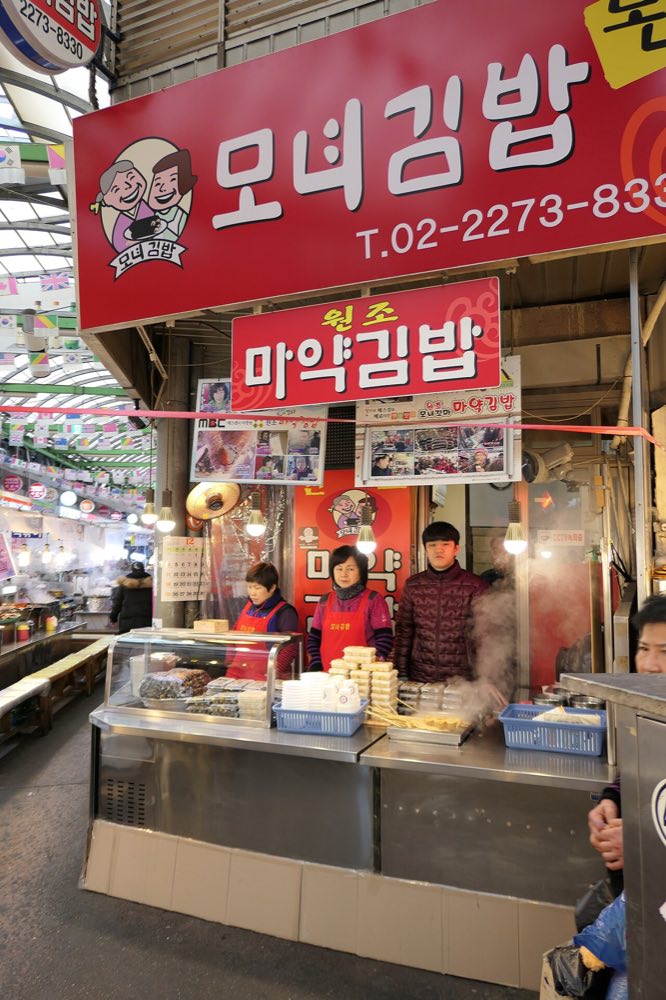
Mayak Kimbap: The “Addictive” Mini Rolls Everyone’s Grabbing
Mayak kimbap literally translates to “drug kimbap,” a nickname earned purely because these bite-sized seaweed rice rolls are so moreish people can’t stop eating them. Unlike a full-size kimbap roll, these are only about 10cm long, filled simply with carrot, pickled radish, and spinach, brushed with sesame oil, and dipped into a sharp mustard-soy sauce that makes the whole thing addictive rather than bland. Several stalls specialize in it, but Monyeo (also seen as Monyeo Wonjo Mayak Gimbap) is one of the market’s most established versions, about a one-minute walk from Jongno 5-ga Station Exit 7, generally open from around 9:30am to 9pm.
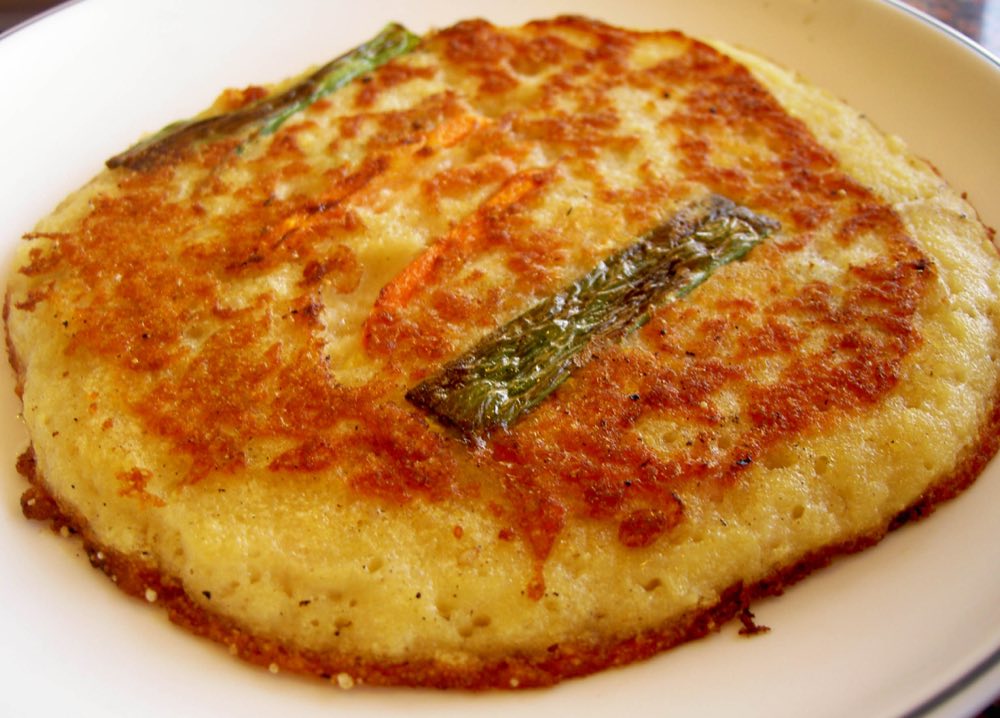
Bindaetteok: The Market’s Signature Mung Bean Pancakes
If one smell defines Gwangjang Market, it’s the sesame oil and batter of bindaetteok frying on huge flat griddles. These mung bean pancakes are easily the most common item in the food alley, and for good reason: they’re crispy on the outside, savory and slightly dense in the middle, and pair perfectly with a bowl of makgeolli (Korean rice wine) if you want the full local experience. Portions are generous and inexpensive, and because so many stalls make them fresh to order, you’ll usually see them cooking right in front of you, which makes for one of the market’s best photo moments too.
Yukhoe Alley: Korea’s Beef Tartare, Made Fresh to Order
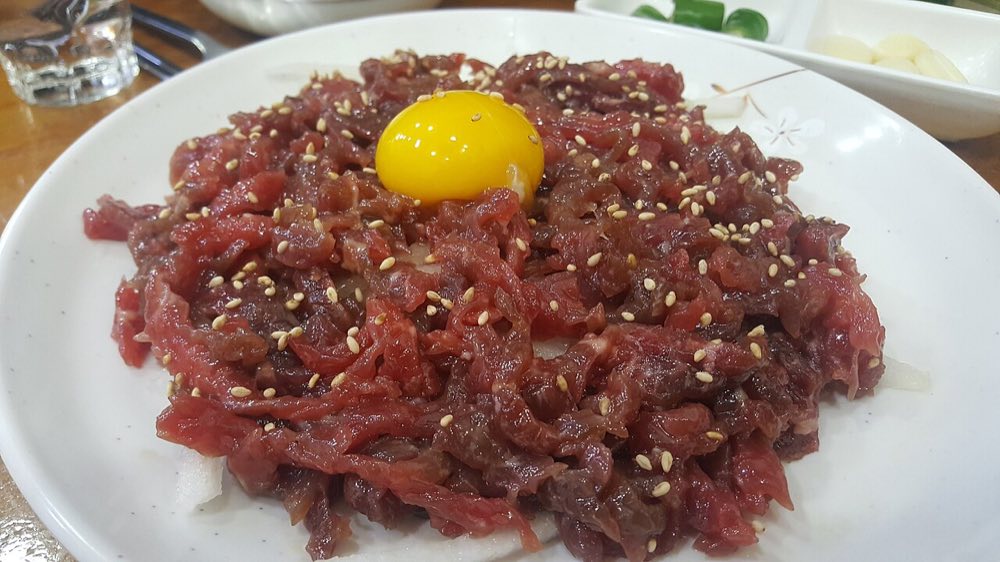
For a more adventurous stop, head to the market’s dedicated yukhoe section, a single indoor side alley lined with stalls serving Korean-style raw beef tartare. Yukhoe is served chilled, hand-sliced, and seasoned with sesame oil, sugar, garlic, and often a raw egg yolk on top, usually alongside julienned Asian pear for a sweet, crisp contrast. It’s not for everyone, but it’s a genuinely different experience from anything you’d find in a Western steakhouse, and the alley’s concentration of specialist stalls means freshness is taken seriously here. If raw beef feels like too big a leap, most yukhoe stalls also serve a lightly seared or mixed version so you can ease in.
Getting to Gwangjang Market and Planning Your Visit
Gwangjang Market sits at 88 Changgyeonggung-ro in Jongno-gu, and it’s an easy walk from two subway stations: Jongno 5-ga Station on Line 1 (Exits 7 or 8) or Euljiro 4-ga Station on Lines 2 and 5 (Exit 4). The main market’s general hours run roughly 9am to 6pm, but the food alley operates on its own schedule, with several stalls (including the famous noodle stall) staying open into the evening. Sundays are quieter, since many textile and household-goods vendors close, though a handful of food stalls still operate. Late morning is a good window if you want shorter lines; early evening gives you the market’s most atmospheric, photogenic version of itself.
FAQ
Is Gwangjang Market too touristy to be worth visiting?
It’s busier than it used to be, especially since the Netflix feature, but it’s still a genuine working market with plenty of local shoppers. Most food stalls display their dishes and prices visibly, so you can point and order even without speaking Korean.
What’s the best time of day to visit Gwangjang Market?
Late morning, around 10-11am, is a good balance of freshly-made food and manageable crowds. If you want the liveliest, most photogenic atmosphere, go in the early evening instead, but expect longer waits at the famous stalls.
Do I need cash at Gwangjang Market?
Many of the older, most famous stalls, including the Netflix noodle stall, are cash-preferred or cash-only, so it’s smart to bring won in small bills rather than relying on cards.
Is Gwangjang Market open on Sundays?
Yes, though it’s quieter. Many textile and household-goods stalls close on Sundays, but several food vendors, particularly noodle and dumpling stalls, stay open, so it’s still worth a visit if food is your main goal.
Gwangjang Market rewards you for showing up hungry and a little curious. Between Cho Yonsoon’s famous noodles, addictive mayak kimbap, crispy bindaetteok, and a full alley dedicated to yukhoe, you can build an entire afternoon of eating without ever sitting down at a formal restaurant. It’s loud, it’s crowded, and it’s absolutely one of the most rewarding food experiences in Seoul for anyone who wants to taste the city’s history rather than just photograph it.
Official Gwangjang Market hours and directions: Korea Tourism Organization.
See how we pick every SeoulBites recommendation on our About page.


댓글 남기기