
Gukbap for breakfast in Seoul is the easiest fix for a red-eye arrival: you land at dawn, the hotel will not take you until afternoon, and a bowl of hot soup with rice is open somewhere within a short walk. Gukbap just means rice served in a hot soup, and for a first meal in Korea the mild versions are the safe pick. Below are the early-opening bowls around Jongno and Myeongdong (a short walk from Namdaemun Market), plus how to order and what to skip on a jet-lagged stomach.
Info last checked: November 20, 2026 (sources: Korea Tourism Organization listings, Jongno-gu office, Google Maps listing data, a 2026 early-breakfast guide). Hours change, so confirm on NAVER Map before you go.
Where to eat gukbap before 9 a.m.: five bowls compared
| Place | Area and station | Listed hours | Bowl and price guide |
|---|---|---|---|
| Miseongok | Myeongdong alley (25-11 Myeongdong-gil) | Opens 6:00; one guide lists 6:00 to 21:00 | Seolleongtang, about KRW 13,000 |
| Hadongkwan (main branch) | 12 Myeongdong 9-gil; near Myeongdong (Line 4) and Euljiro 1-ga (Line 2) | 7:00 to 16:00, closed Sundays; can close early when sold out | Gomtang, KRW 18,000 |
| Imun Seolnongtang | 38-13 Ujeongguk-ro, Jongno; Jonggak (Line 1) exit 3 | 8:00 to 21:00 (Sundays to 20:00), break 15:00 to 16:30 | Seolleongtang, about KRW 14,000 in one 2026 price guide |
| Sinseon Seolleongtang (Myeongdong) | Myeongdong | Described as 24 hours in an older guide, so verify | Seolleongtang and dumpling versions |
| Jeonju-style kongnamul gukbap chains | Many 24-hour branches; one verified Google listing is in Gangnam | 24 hours at that branch (listing data from November 2026) | Bean sprout rice soup, price varies by branch |
Prices come from published guides, not from a visit, and will move with menu updates. Hours are the part to double check, especially around public holidays.
Kongnamul gukbap is the gentle choice
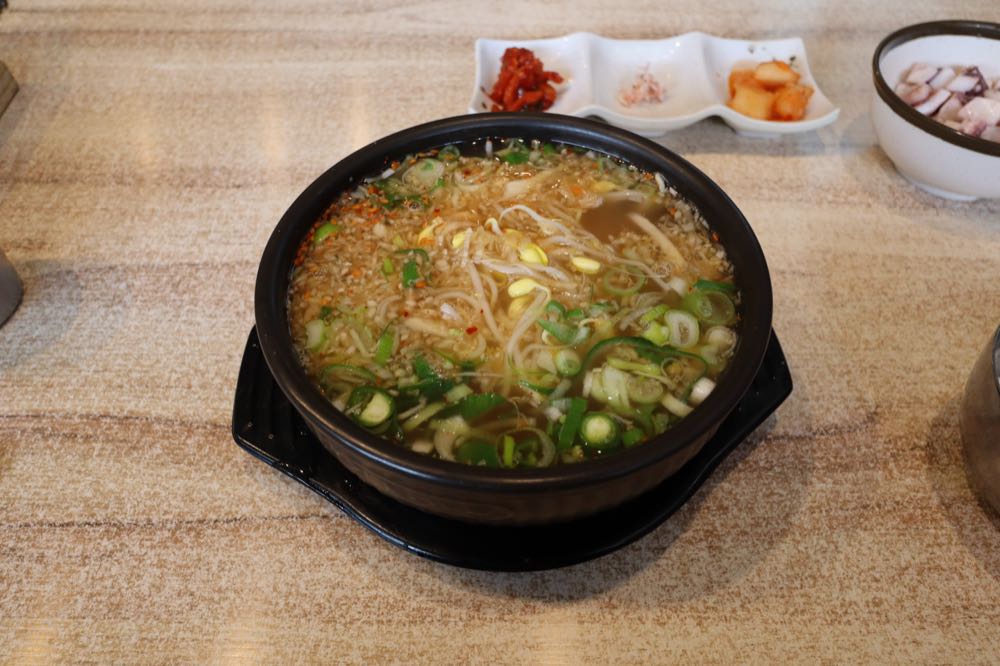
If your stomach is still on another time zone, kongnamul gukbap (bean sprout rice soup) is the mildest of the usual options. The dish comes from Jeonju, where it is a morning and hangover staple, and several Jeonju-style chains list 24-hour service. It is also the bowl Jay picks first (see his note below). I could only verify one 24-hour Jeonju-style branch by listing (in Gangnam, not Jongno), so search 콩나물국밥 on NAVER Map near your hotel instead of trusting a single address.
Imun Seolnongtang: the 1904 option near Jonggak
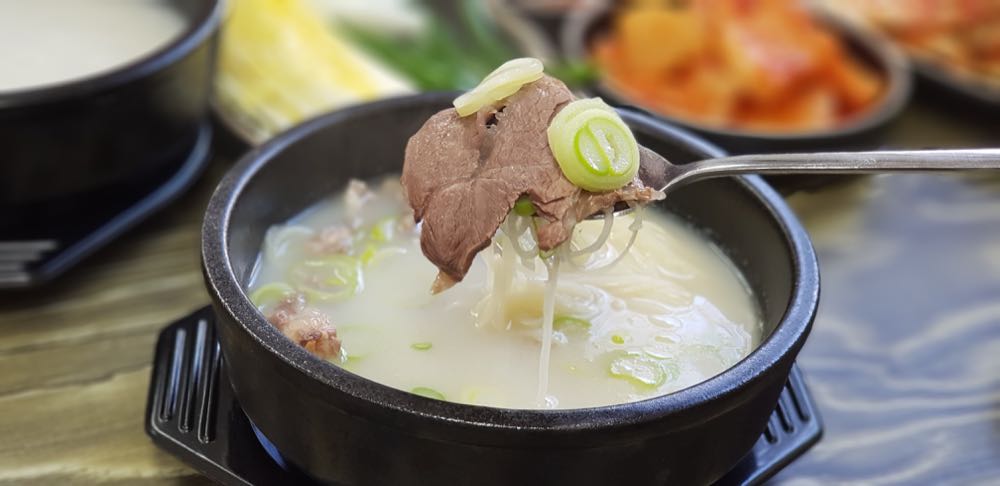
Imun Seolnongtang is described as the first restaurant licensed by the city of Seoul, opened in 1904, and it sits in Jongno near Jonggak Station. It opens at 8:00, later than the Myeongdong places, so it suits travelers who have already dropped their bags. One review guide says its broth is thinner than at some other seolleongtang shops, and the Jongno office listing says it takes credit cards. Walk from exit 3 of Jonggak Station and look for a two-story, Korean-style building.
Myeongdong and Namdaemun: earlier, but sold out by midday
For a 6:00 or 7:00 arrival, Myeongdong has the earliest bowls. Miseongok is listed from 6:00 with mild seolleongtang, and Hadongkwan, open since 1939, starts at 7:00 and serves clear beef gomtang. Hadongkwan closes on Sundays and has a habit of ending the day when the pot runs out, so go for breakfast, not a late lunch. Both are an easy walk to Namdaemun Market, and if you would rather eat noodles there, our Namdaemun kalguksu alley guide covers the alley.
How to order, with the Korean to say it
Gukbap places are fast and built for solo diners, so you can walk in, sit, and point. Useful lines:
- 콩나물국밥 하나 주세요 (kongnamul gukbap hana juseyo): one bean sprout gukbap, please.
- 제일 인기 있는 메뉴가 뭐예요? (jeil ingi inneun menyuga mwoyeyo?): what is your most popular dish?
- 안 맵게 해 주세요 (an maepge hae juseyo): not spicy, please.
- 밥 따로 주세요 (bap ttaro juseyo): rice on the side.
Seasoning is usually left to you at the table: salt, chopped scallions and kimchi are there, so taste the broth before adding anything. In the morning, keep the side dishes plain rather than the spicy ones.
Jay’s take
“I recommend kongnamul gukbap. It is not harsh or heavy as a morning meal. There are a lot of 24-hour restaurants, so finding somewhere to eat gukbap in the morning was easy. I think it is best to ask the restaurant for its most popular dish and order that. For the side dishes, I recommend the non-spicy ones in the morning. I like to eat the solids in the soup first and then the rice, but a lot of restaurants already serve gukbap with the rice in the soup.”
Which one should you pick?
Land before 7:00 and want the oldest-name experience: Hadongkwan or Miseongok in Myeongdong. Land around 8:00 and are staying near Insadong or Jongno: Imun Seolnongtang. Want the mildest, least stressful bowl at any hour: a 24-hour kongnamul gukbap branch. Hungover or just salty-soup averse: our haejangguk guide covers the lighter options. Also see the Seoul food markets guide for what to eat once you are fed and ready to explore.
Sources: Korea Tourism Organization listing for Imun Seolnongtang and listing for Hadongkwan.
Keep exploring: Namdaemun kalguksu alley, haejangguk, the Korean morning-after soup and the Gwangjang Market food guide. More about this site on the About page.


Leave a Reply