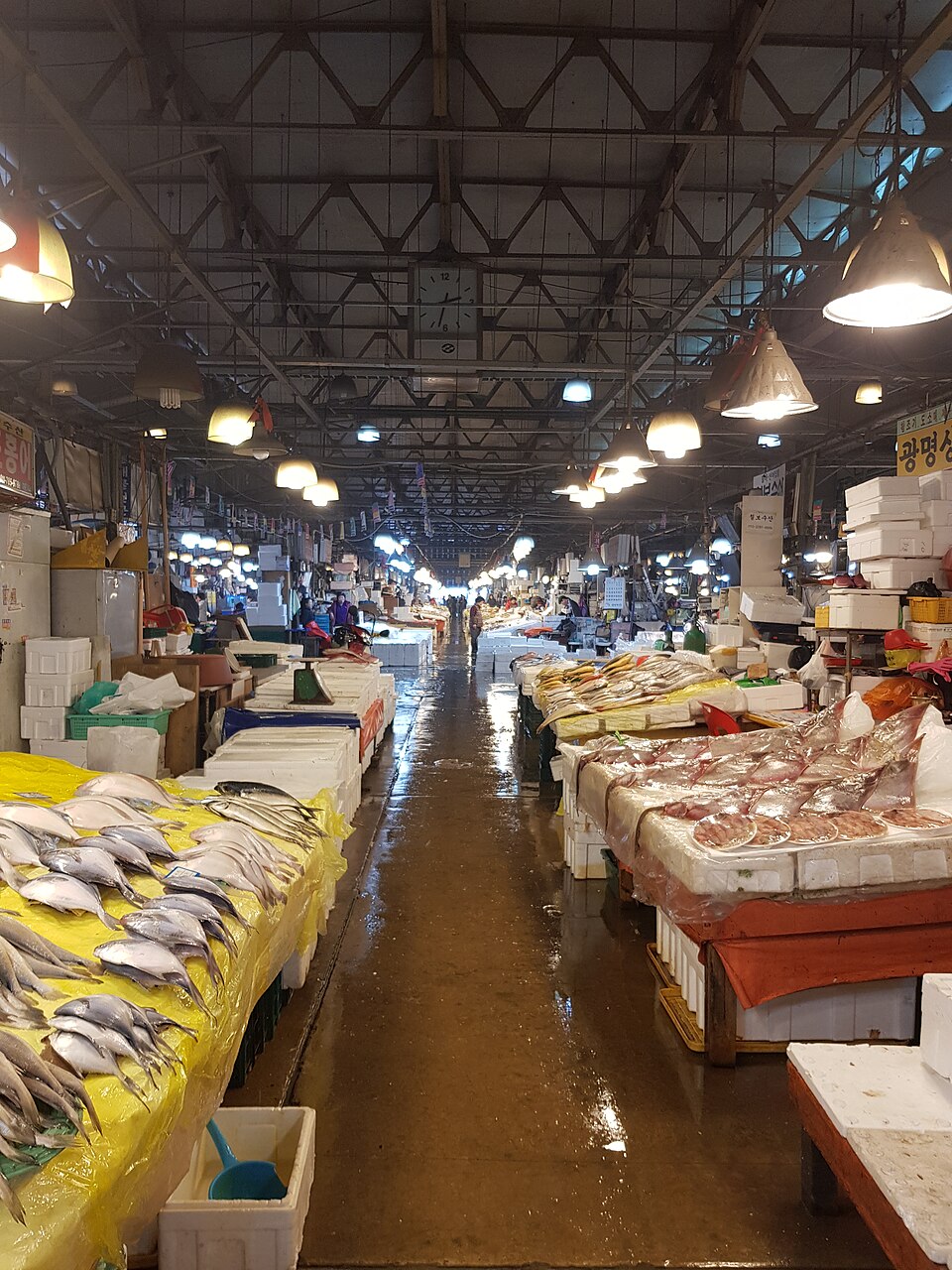
The Noryangjin Fish Market in Seoul is the easiest way to eat seafood the way locals do: you pick a live fish or shellfish from a vendor, then carry it upstairs to a restaurant that slices or cooks it for you. It sounds chaotic, but the system is simple once you know the steps. This guide explains how it works, what you will actually pay for, and what to order if you do not eat raw fish.
How the Noryangjin Fish Market works
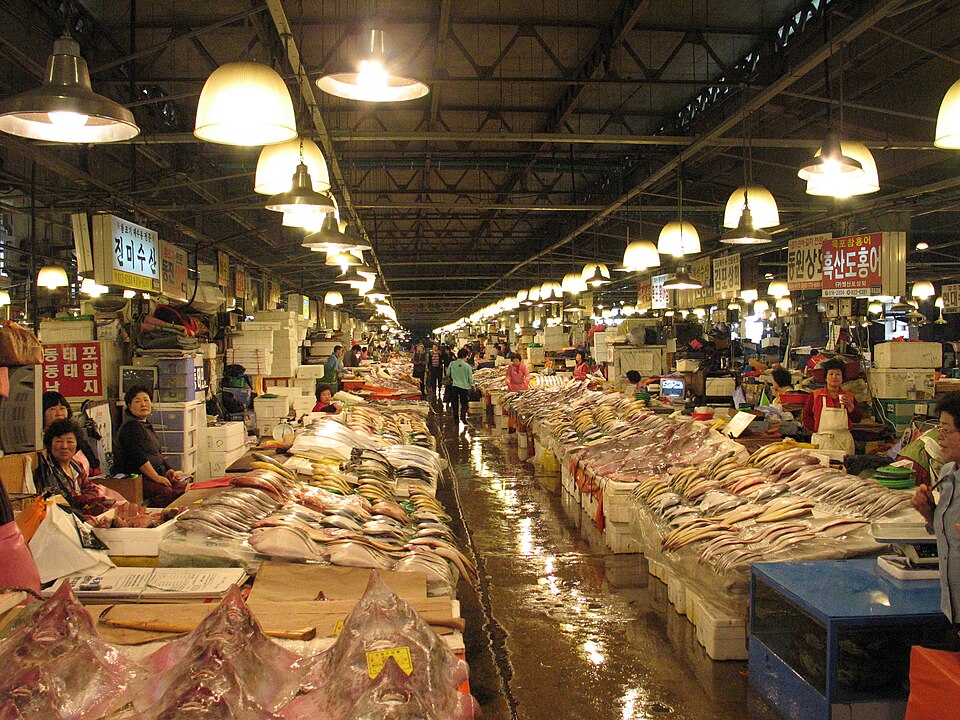
Noryangjin Fisheries Wholesale Market is Seoul’s largest fish market, a working wholesale hub with a retail floor that visitors can freely walk through. According to Visit Seoul, restaurants connected to the market will prepare any fish you buy as hoe (raw fish), and the usual arrangement is that you pay the fishmonger for the seafood and the restaurant for side dishes, vegetables and sauces.
The flow is the same almost everywhere: choose your seafood on the market floor, confirm the weight and total price, tell the vendor how you want it prepared, then follow a runner to the affiliated restaurant. Ask about the table or cooking fee before you agree, and pay only once you understand the full total. A phone calculator and a translation app make this much easier.
What to order (and what to skip if you hate raw fish)
Korean raw fish, called hoe, is firmer and fresher-tasting than aged Japanese sashimi. The most common choices are flounder (gwang-eo), rockfish (u-reok), salmon and tuna. Live seafood such as shrimp, scallops, clams and abalone is sold by the piece or weight, and many stalls will happily grill or steam it instead.
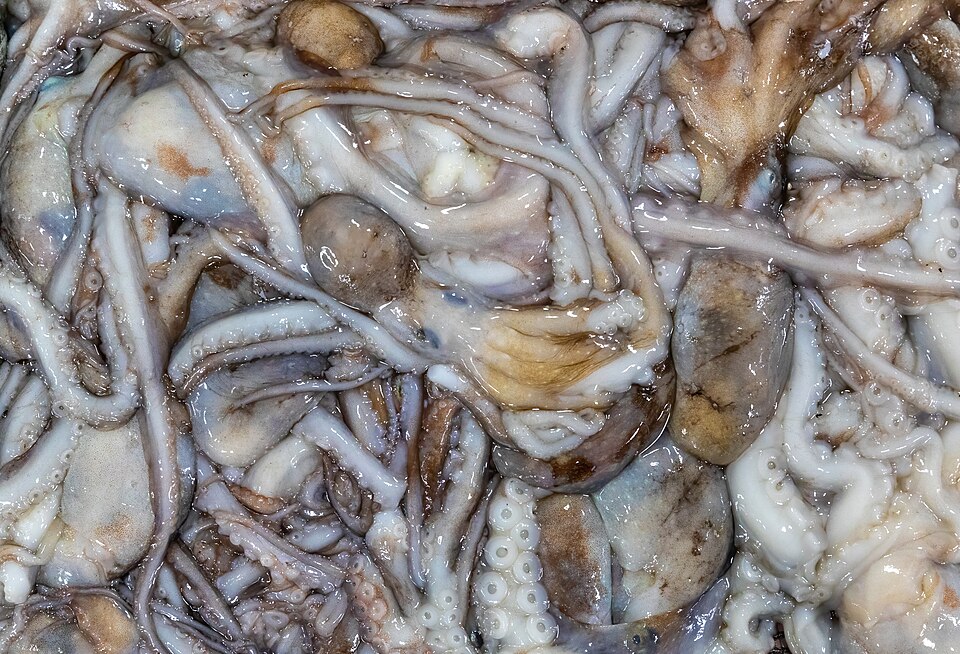
Once the sashimi is gone, restaurants usually turn the leftover bones and head into maeuntang, a spicy fish stew that is a classic way to end the meal with a bowl of rice. If you are nervous about sannakji (live octopus), you can ask for the octopus cooked instead.
How to get to Noryangjin Fish Market
The market sits at 674 Nodeul-ro in Dongjak-gu and connects directly to Noryangjin Station on Seoul Subway Lines 1 and 9. Visit Seoul lists the nearest exit as Exit 9, and the retail floor is open around the clock, though most restaurants are busiest at lunch and dinner. Real auctions happen in the middle of the night, roughly 1 a.m. to 4 a.m., and are closed on Sundays.
What else to do nearby
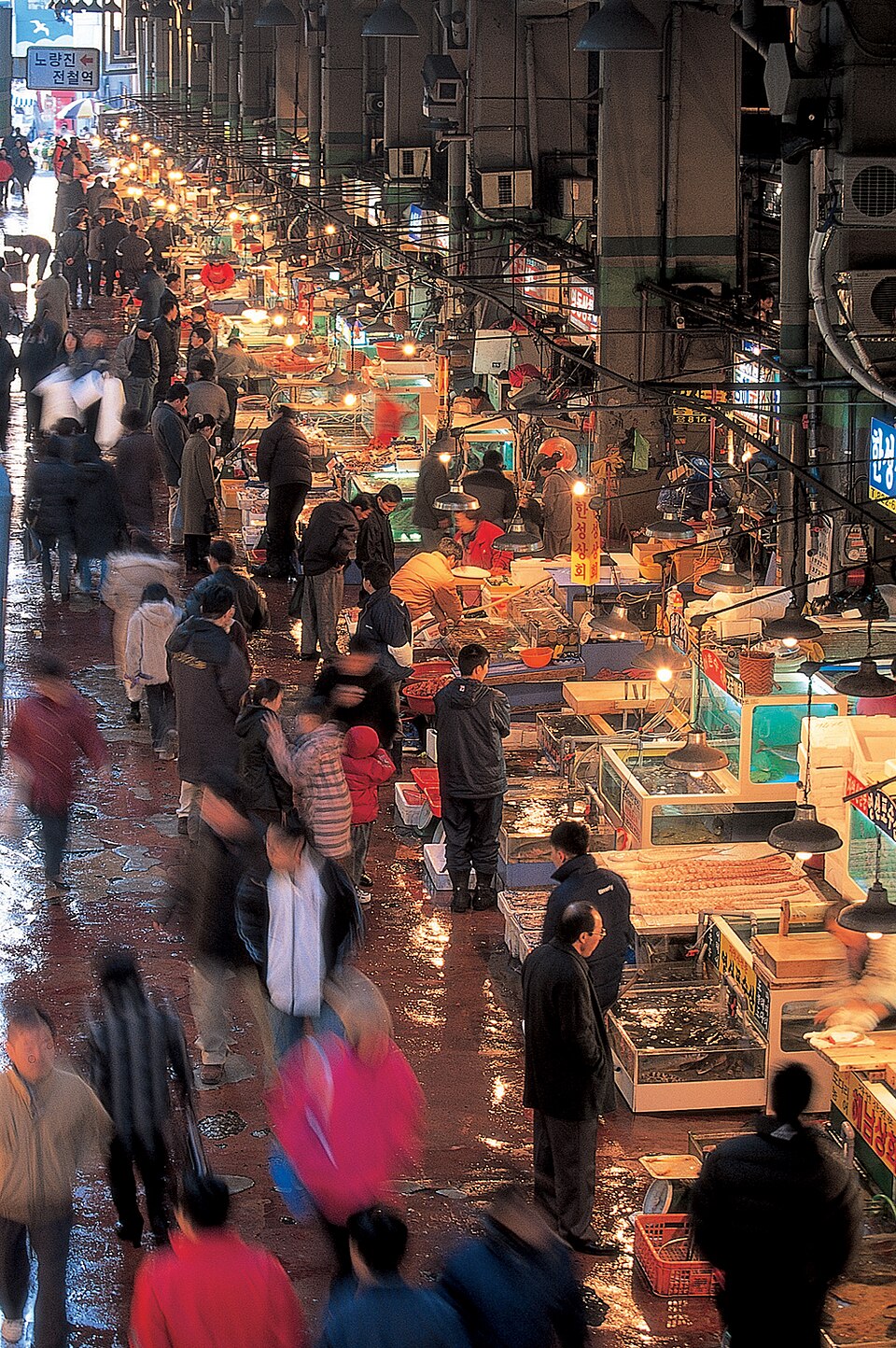
Right on the other side of the station is Cup Rice Street, a row of cheap street vendors that grew up around the exam-prep students in the area. It is a good place to try a budget bowl if you want something extra, or if your group includes someone who skips seafood. The Han River parks are also a short walk away for an after-dinner stroll.
Noryangjin Fish Market FAQ
Do I need to speak Korean to buy fish at Noryangjin?
No. Vendors are used to tourists and will point, gesture or type prices on a calculator. Pointing at the fish and holding up fingers for the quantity works fine.
Do I have to eat raw fish?
No. Crab, shrimp, shellfish and whole fish can all be grilled, steamed or made into a stew. Tell the restaurant clearly if you have a shellfish allergy or cannot eat raw seafood.
Is Noryangjin Fish Market cheap?
It can be good value, but prices change daily depending on the catch, and the restaurant adds a separate seating or cooking fee. Check prices on a couple of stalls before buying, and confirm the total in writing or on a screen.
A few practical tips: wear closed, non-slip shoes because the floors are wet, avoid dragging a suitcase through the aisles, check opening hours before you go, and order a few drinks or side dishes at the restaurant, since that is part of how they earn a living from your table.
Noryangjin is not a polished tourist attraction, and that is the appeal. If you want a loud, fresh, very Korean seafood experience in the middle of Seoul, a first-time visit takes about an hour or two and is easy to combine with Yeouido or Yongsan.
Learn more about SeoulBites and who writes this guide.
Official Korea Tourism Organization page for Noryangjin Fisheries Wholesale Market.


댓글 남기기