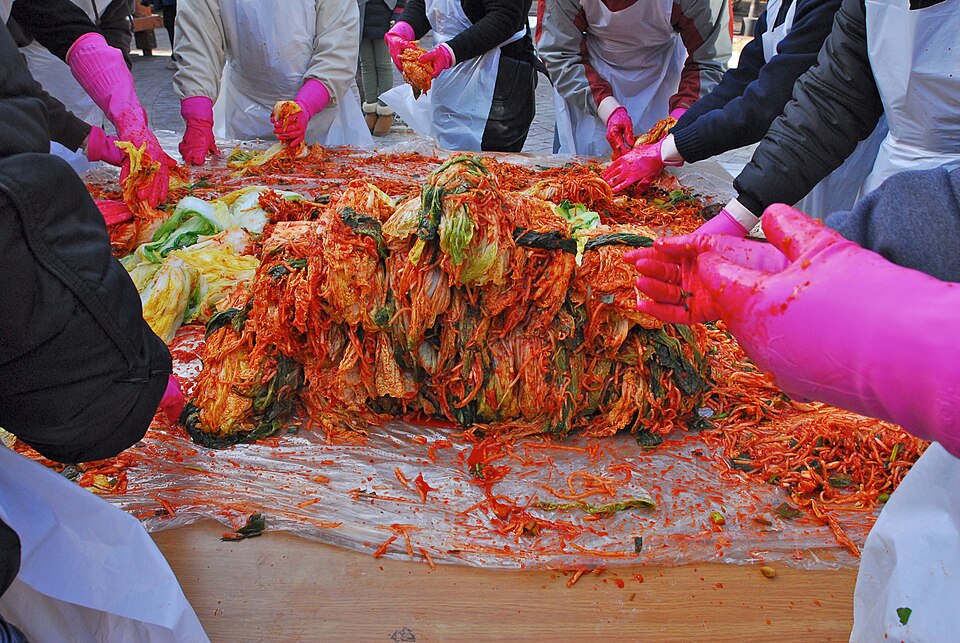
Late November is kimjang season, the weeks when Korean families and neighbors make a winter’s worth of kimchi in one go. If you are in Seoul at this time of year, you will see mountains of napa cabbage at markets and red-stained plastic basins everywhere. This guide explains what kimjang is, why many Koreans now buy their kimchi instead, and where to eat the dish that kimjang kimchi turns into: kimchi-jjim.
Updated November 6, 2026. Info last checked: November 6, 2026 (sources: UNESCO, Korea Ministry of Culture, Sports and Tourism, each restaurant’s official English page).
What kimjang actually is
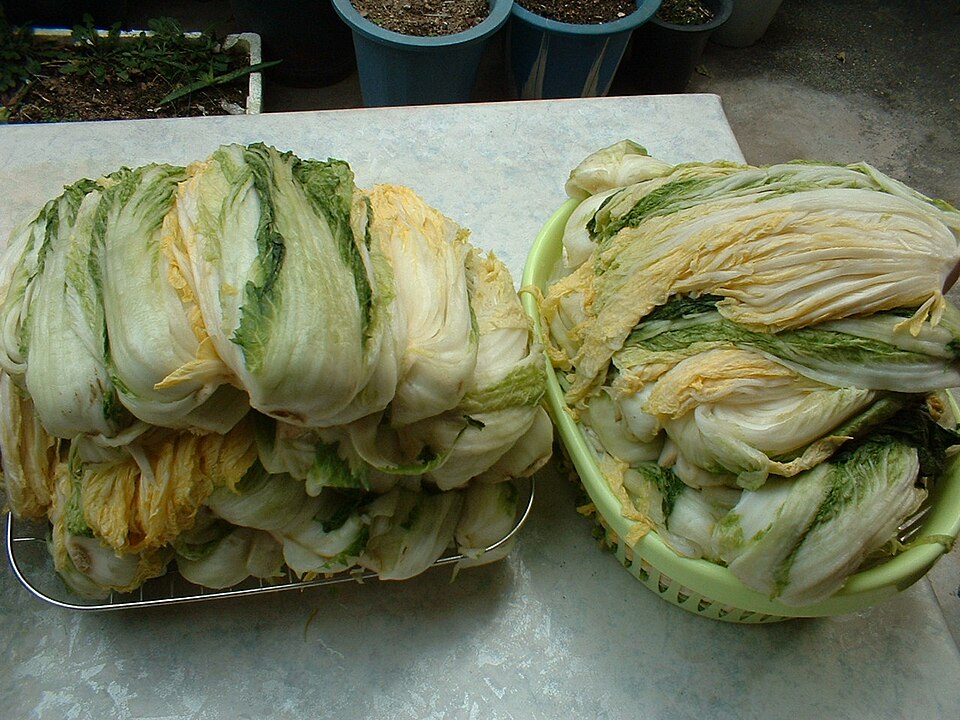
Kimjang is the communal making and sharing of kimchi in late autumn. UNESCO added it to its Representative List of the Intangible Cultural Heritage of Humanity in 2013, describing a yearly cycle in which households buy salted shrimp and anchovy in spring, sea salt in summer, and dry and grind red chili in late summer, so that late autumn can be spent making and sharing large quantities for the winter. UNESCO also notes that housewives watch weather forecasts to pick the best temperature for the job. Korea’s culture ministry describes the same custom as families and neighbors each bringing their own methods, passed down through generations.
Jay’s take: the family kimjang, and why people buy now
SeoulBites’ Jay Han, a Korean who has lived in Ho Chi Minh City for nine years, shared three points for this guide.
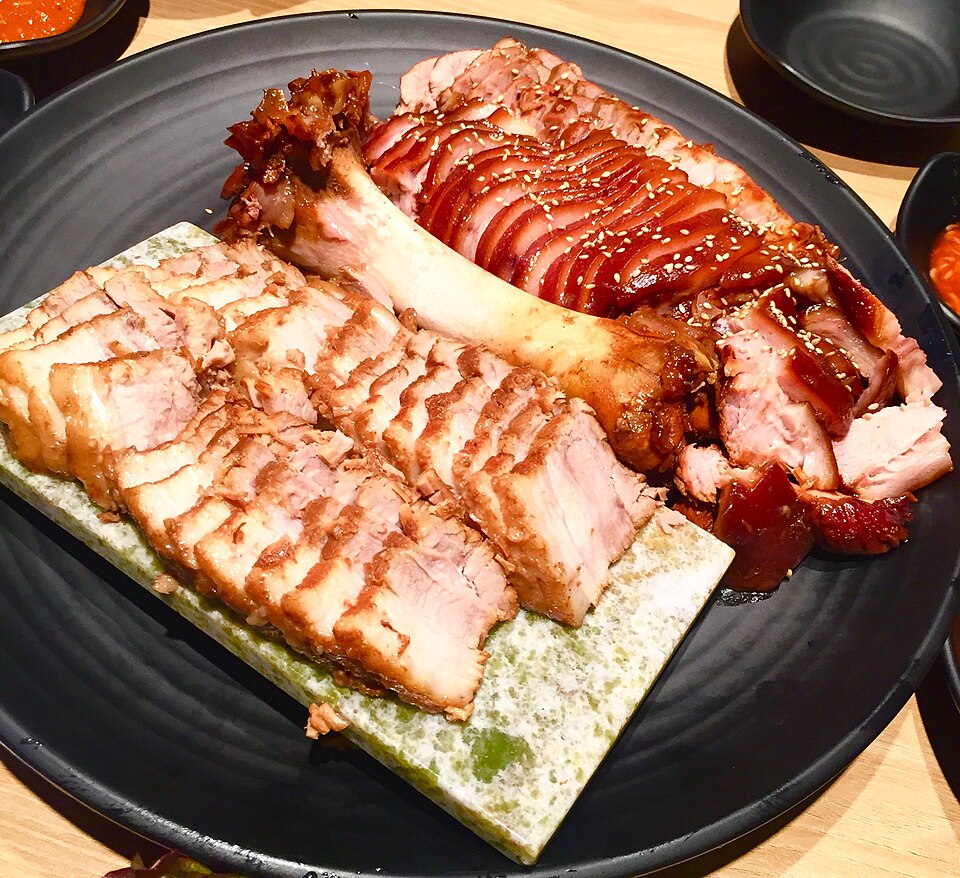
- The memory: “We made kimjang as a family, and then everyone ate the boiled pork (suyuk) together with the fresh kimchi.” He adds that these days most people just buy their kimchi.
- The word test: “If there is a lot of broth, it is jjigae. If there is almost no broth, it is jjim.”
- The eating tip: “Kimchi tastes better with ramyeon or noodles than with rice. That is just my personal opinion.”
That boiled-pork-and-fresh-kimchi meal has a name you will see on menus: bossam. It is the restaurant version of the kimjang table.
Kimchi-jjim vs kimchi-jjigae: the broth rule
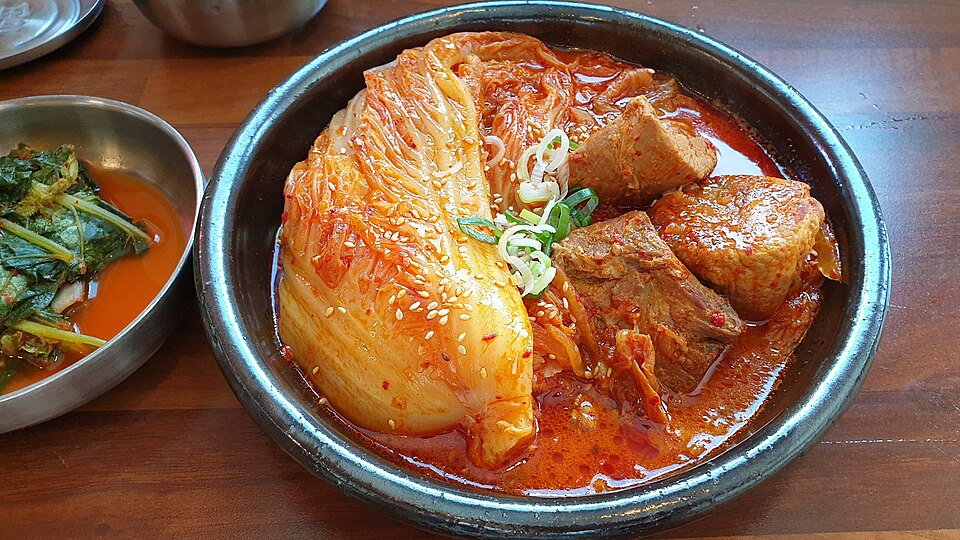
Both dishes cook aged (sour, well-fermented) kimchi with pork, so they look similar on a menu. The difference is the liquid. Kimchi-jjigae is a stew with plenty of broth you spoon over rice. Kimchi-jjim is braised or steamed until the liquid has mostly cooked down, so the kimchi and pork come out thick, intense and slightly sticky. That is why jjim is often ordered as a shared dish with makgeolli or soju, while jjigae is a one-pot lunch.
| Kimchi-jjigae | Kimchi-jjim | |
|---|---|---|
| Broth | Plenty, served as a stew | Almost none, cooked down |
| How you eat it | Spooned over rice, one pot per person is common | Shared at the table, pulled apart with chopsticks |
| Flavor | Sour and soupy | Concentrated, soft, deeply sour |
| Good with | Rice | Rice, makgeolli, or noodles (Jay’s pick) |
Where to eat kimchi-jjim and bossam in Seoul
Three Seoul restaurants publish English menus that put kimchi-jjim and bossam front and center. Prices and hours below come from their own pages and may change, so check before you go.
| Restaurant | Nearest station | Kimchi-jjim | Weekday lunch |
|---|---|---|---|
| Sungnye Dodam (숭례도담), 14 Sejong-daero 18-gil, Jung-gu | City Hall Station, Line 1 and 2, Exit 7 | Small (for 2) ₩24,000; medium (for 3) ₩35,000 | Kimchi-jjim set ₩11,000, from 2 people, 11:00 to 14:00 |
| Hyehwa Dodam (혜화도담), 16-6 Daemyeong 1-gil, Jongno-gu | Hyehwa Station, Line 4, Exit 4 | Small (for 2) ₩24,000 | Kimchi-jjim lunch, last order 14:00 |
| Jongno Dodam (종로도담), 78 Sambong-ro, Jongno-gu | Jonggak Station, Line 1, Exit 2 | Small (for 2) ₩24,000 | Set ₩12,000, 2 or more people (1 person before 11:30 or after 13:00) |
All three list a break from 15:00 to 17:00. For a first try, the weekday lunch sets are the cheapest way in. At night, order the small kimchi-jjim plus buchu-jeon (chive pancake) and a bottle of makgeolli, which is how Korean menus pair them. The map below shows Sungnye Dodam, the easiest to reach from Seoul Station and City Hall.
How to order and what to say
| Say this | Hangul | Meaning |
|---|---|---|
| Kimchi-jjim, so (small), please | 김치찜 소 주세요 | A small portion that serves two |
| Not too spicy, please | 안 맵게 해 주세요 | Ask this if you are spice-shy; the kitchen may say it cannot adjust the dish |
| More kimchi, please | 김치 더 주세요 | Side kimchi can be refilled at bossam places, but the meat cannot |
| One bottle of makgeolli | 막걸리 한 병이요 | The classic partner |
Which one should you pick?
- Want the kimjang experience without cooking: bossam (boiled pork with fresh kimchi).
- Want the dish expats say they miss: kimchi-jjim. SeoulBites’ what a Korean eats first back in Seoul includes Jay’s answer on this.
- Want something soupier for a cold day: ask for kimchi-jjigae instead.
Practical tip: go at the edge of lunch hours (11:00 or after 13:00) to avoid the office crowd, and bring a second person, since most sets and the small jjim are built for two.
Keep exploring: our guide to Korean winter street snacks, Mangwon Market, the Seoul Food Markets Guide, and the About page.
For the cultural background, read UNESCO’s Kimjang, making and sharing kimchi in the Republic of Korea entry.


Leave a Reply