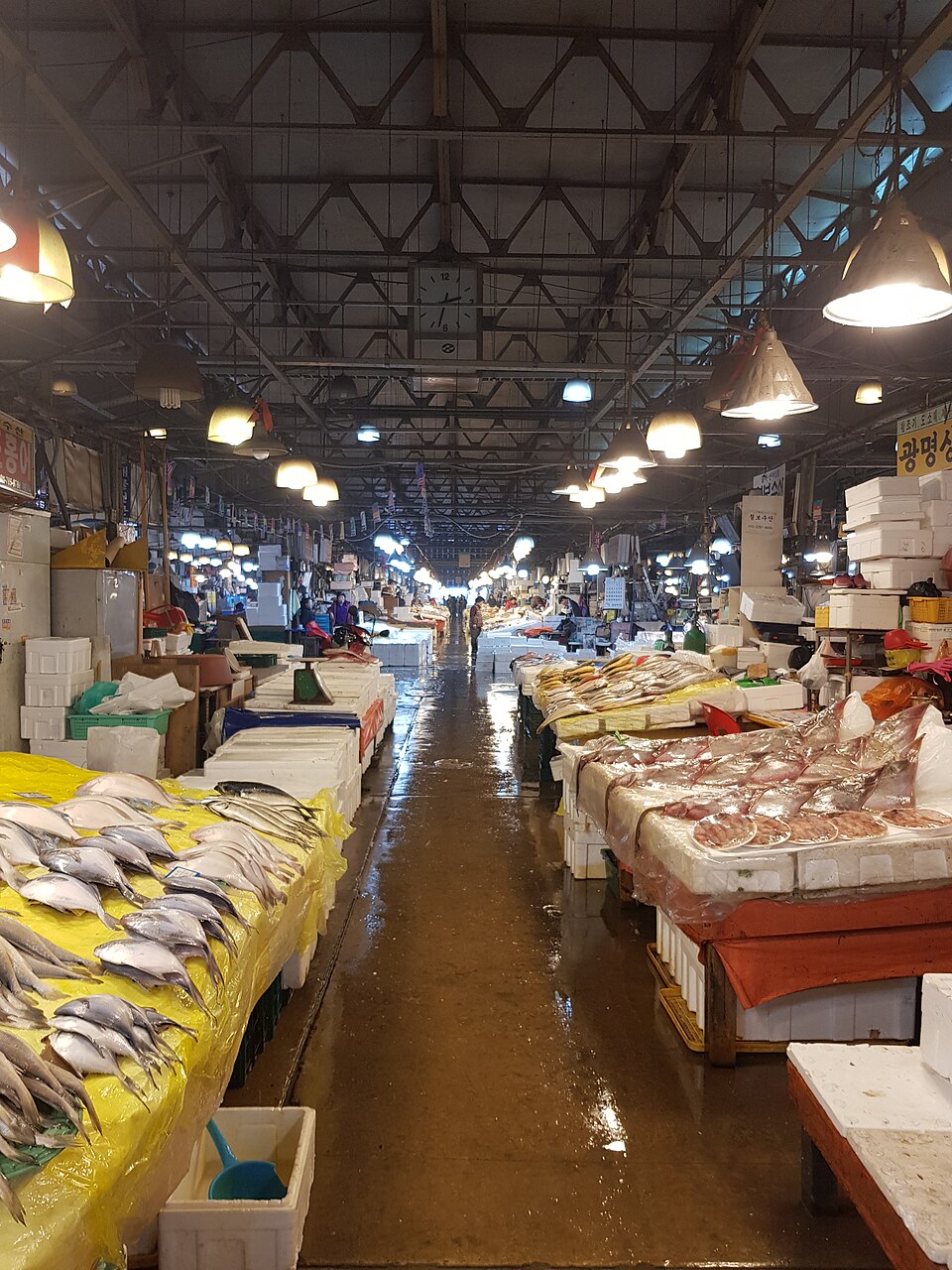
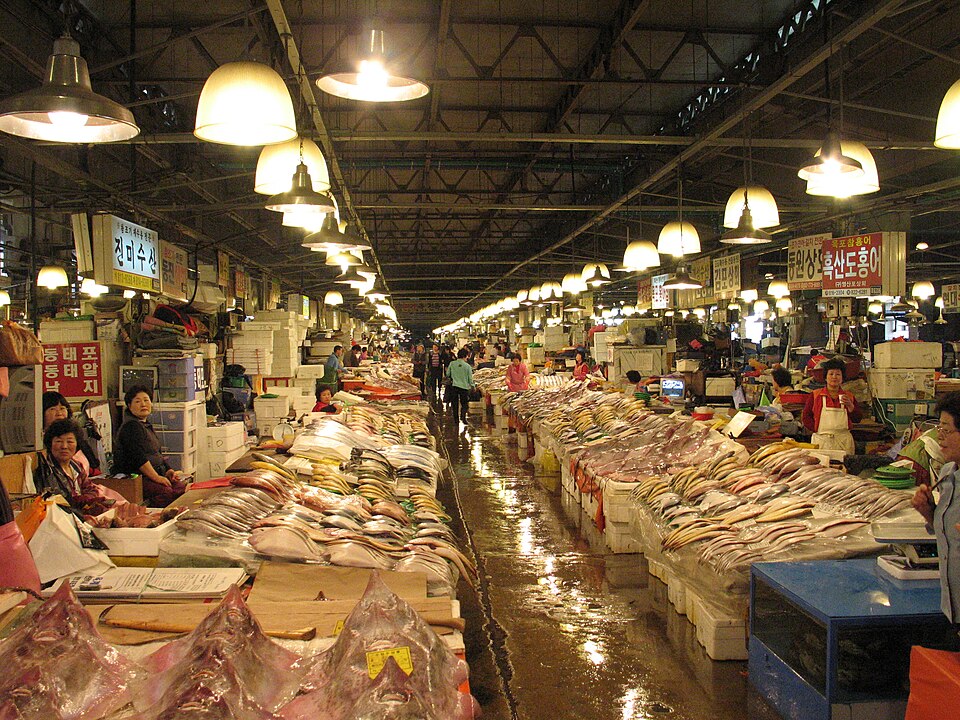
Noryangjin Fish Market is not a seafood restaurant. It is a wholesale market with a kitchen bolted on, and most visitor mistakes come from treating it like the first when it is the second. You pay twice: once to a stall for the fish, once to an upstairs restaurant for the table and the cooking. Here is how the two bills work in 2026, what Korean diners say about the upstairs restaurants, and how to choose between the second floor and the fifth.
Updated November 24, 2026: re-checked hours against the market’s own page, corrected the subway exits and the auction times, and added a cost table, a booking comparison and Korean ordering phrases.
- Where: 674 Nodeul-ro, Dongjak-gu, Seoul
- Subway: Noryangjin Station, Line 1 Exit 9 (about 150 m) or Line 9 Exit 7 (about 70 m through the underground passage)
- Retail hours: open year-round, but each section keeps its own hours (table below)
- Auction: small hours of the night, closed Sundays, New Year’s Day, Seollal and Chuseok; a separate trip from dinner
- Info last checked: November 24, 2026 (sources: Noryangjin market operator, Korea Tourism Organization, Seoul Off Script, SeoulKnows, Naver blog reviews from 2026)
Noryangjin sits in Seoul’s wider market scene. For street snacks instead of seafood, see our Gwangjang Market guide or the quieter Mangwon Market guide. For what a Korean actually craves on a first night home, read this piece on gopchang, hoe and ganjang gejang.
The two-bill system, step by step
- Walk the first-floor sales floor and pick your seafood. Ask whether the price is per kilo or for the whole animal, and agree the weight and the total before the stall bags it.
- Say how you want it prepared: sliced raw (hoe), steamed or grilled. Stalls will clean it and pack it, or send it upstairs for you.
- Choose a restaurant. The second floor has many small ones; the fifth floor has a smaller number of larger ones with a view.
- Pay the restaurant its table charge and cooking fee. This is the second bill, and it is separate from what you paid the stall.
The operator’s own hours page lists the whole market as open all year, but only the premium fish section runs around the clock. Individual restaurants set their own times, so check before you go. The retail sections are:
| Section | Retail hours | Auction start |
|---|---|---|
| Premium fish (live and fresh) | 00:00 to 24:00 | Live fish 03:00, fresh fish 01:30 |
| General seafood | 01:30 to 22:00 | 00:00 |
| Shellfish | 01:00 to 22:00 | 01:00 |
| Frozen | 03:30 to 22:00 | 03:00 |
| Dried fish | 23:00 to 19:00 next day | n/a |
| Salted seafood (jeotgal) | 03:00 to 19:00 | n/a |
Source: Noryangjin Fisheries Wholesale Market, business hours page (susansijang.co.kr). Auctions are closed on Sundays, New Year’s Day and three days each for Seollal and Chuseok, and they are for traders, so ask the operator (02-2254-8000) before planning to watch one.
What a meal costs: the table charge and the cooking fee
Prices move daily with the catch, and restaurants set their own fees. These figures come from 2026 guides and Naver reviews, so treat them as a floor and ask before you sit.
| Item | Typical 2026 figure | Who you pay |
|---|---|---|
| One live fish | About 30,000 to 50,000 won, by species and size | The stall (Seoul Off Script) |
| Table charge | 2,000 to 4,000 won per person in one April guide; 5,000 won per person at two restaurants reviewed on Naver in 2026 | The restaurant |
| Maeuntang (spicy fish stew) | About 5,000 won per person; 10,000 won for two at one restaurant | The restaurant |
| Steaming crab | About 8,000 won per kilo at one fifth-floor restaurant | The restaurant |
| Missing fish bones for the stew | Some restaurants add 5,000 won if you did not bring them | The restaurant |
The jump from “cheap” to “expensive” is usually the seafood, not the room. A Naver blogger who posted on April 18, 2026 recorded one big dinner at Hanuel-chae Annex on the second floor: king crab 193,000 won, a large yellowtail 60,000 won, and 83,000 won at the restaurant for the table charge, steaming, preparation, stew, rice and drinks. The total was 336,000 won. The writer called it worth it as a one-off and said next time they would order less.
Second floor or fifth floor?
Korean reviewers draw a clear line. A Naver post dated May 11, 2026 describes the second and fifth floors as the same system with different comfort: the fifth floor is cleaner, quieter and has a view toward Yeouido, and on Fridays and Saturdays it needs a reservation. A January 27, 2026 review of Cheonghaejin, a second-floor restaurant, says the second-floor restaurants are better approached with modest expectations, but that a good one is tidy and not too loud.
| Second floor | Fifth floor | |
|---|---|---|
| Feel | Busy, many small restaurants, closer to the stalls | Quieter, window views, fewer restaurants |
| Booking | Walk-in often works on weekdays; weekend tables for two can fill 2 to 3 weeks ahead at popular ones (Cheonghaejin review, Jan 2026) | Reserve on Fridays and Saturdays; one restaurant takes groups of 3 or more and a refundable deposit of 15,000 won per person (May 2026 review) |
| Time limit | Varies | One reviewed restaurant limits full-house seating to 2 hours |
| Outside food | Some ban fried food from outside because they sell their own | Check when booking |
Reservation rules and deposits are restaurant-specific and can change, so treat the right-hand column as an example of what to ask, not a rule.
What to order, and what to do if you do not eat raw fish
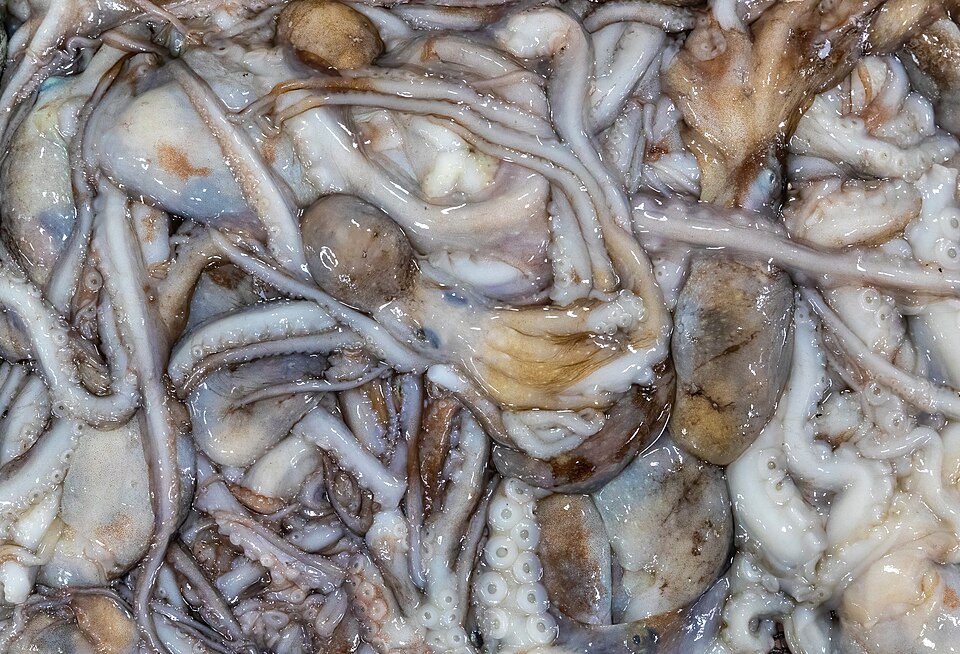
Hoe here means flounder (gwang-eo), rockfish (u-reok), salmon, tuna and, in winter, yellowtail. Live shrimp, scallops, clams and abalone are sold by weight or piece, and any of them can be grilled or steamed upstairs. Crab is seasonal: the May review above calls female blue crab at its best that month.
The classic ending is maeuntang, a spicy stew made from the fish bones and head. If you want it, ask the stall to pack the bones with your order. Otherwise the restaurant may charge extra or bring a weaker broth, and one reviewer called a restaurant’s stew bland for exactly that reason. If live octopus (sannakji) is not for you, ask for it cooked.
Korean phrases that save money
| Say this | Hangul | Meaning |
|---|---|---|
| How much is this? | 이거 얼마예요? | Ask the price first |
| Is that per kilo? | 킬로당이에요? | Avoids a surprise at the scale |
| Please pack the fish bones for stew | 매운탕거리 같이 싸 주세요 | Stew ingredients from the stall |
| Please slice it | 회 떠 주세요 | Sliced raw fish |
| Please steam it | 쪄 주세요 | For crab or shellfish |
| How much is the table charge? | 상차림비 얼마예요? | Ask before you sit |
How to get there
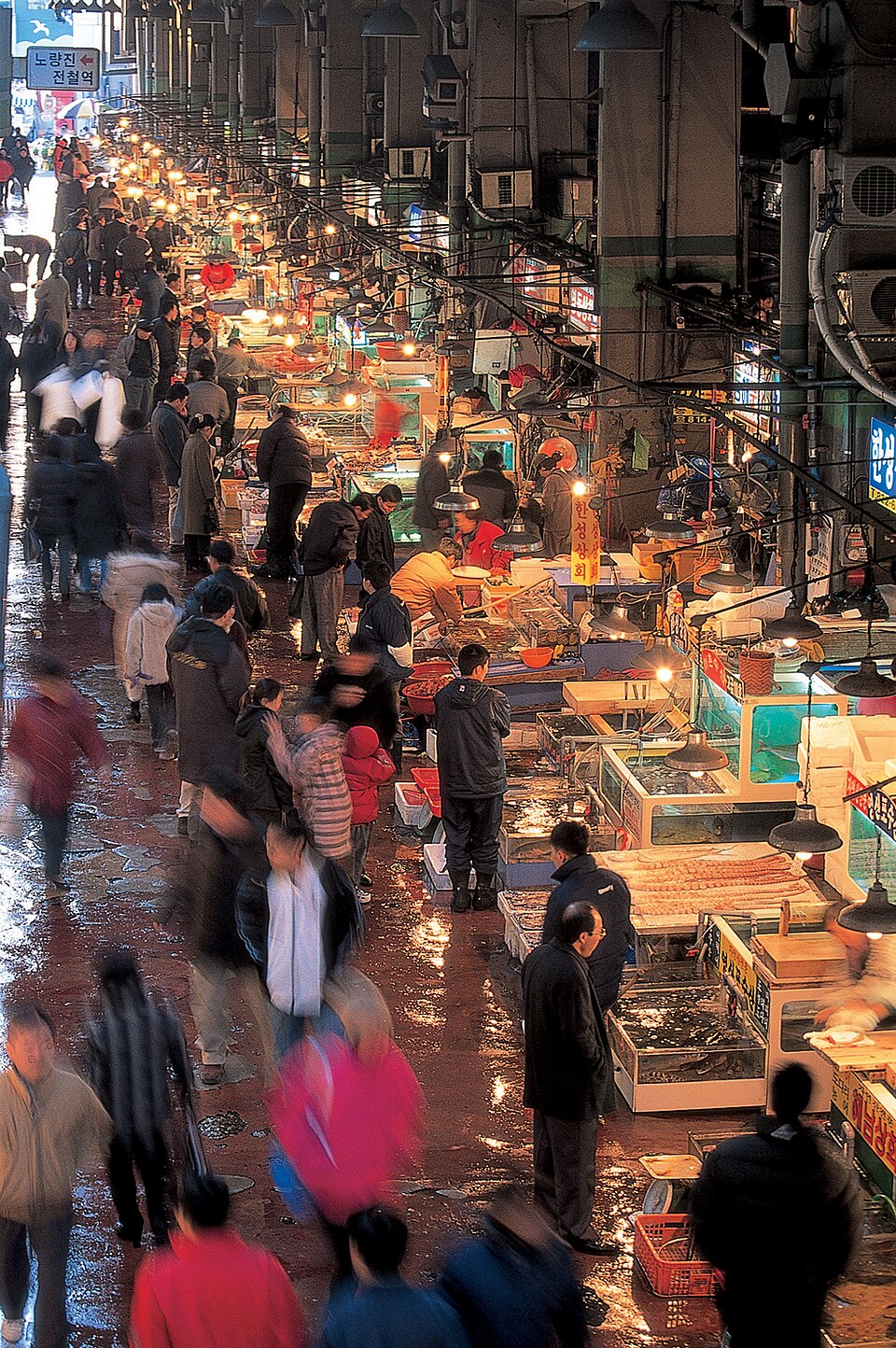
The market connects to Noryangjin Station. From Line 1, take Exit 9 and walk straight about 150 m. From Line 9, take Exit 7 and walk about 70 m, then go through the underground passage. The market page lists 1,160 parking spaces with free parking from 04:00 to 08:00 and for cars leaving within 10 minutes. Wear closed, non-slip shoes because the floors are wet, and leave the suitcase at the hotel.
What else is nearby
Cup Rice Street, on the other side of the station, is a row of cheap vendors that grew up around exam-prep students and works if someone in your group skips seafood. The Han River parks are a short walk away for an after-dinner stroll, and the market’s own fifth-floor rooftop park is open for a view.
Which plan fits you
- First time, no Korean: choose one stall, agree the total on a calculator, then book a fifth-floor restaurant for a weekend or arrive early on a weekday.
- On a budget: buy a smaller fish, skip the extras, and ask each restaurant for the all-in fee before you sit.
- Big occasion: expect a total in the hundreds of thousands of won if king crab is on the table, and book ahead.
- No raw fish: shellfish and whole fish steamed or grilled work well; tell the restaurant about any shellfish allergy.
Keep exploring: our Seoul food markets guide compares the city’s markets side by side, and the Namdaemun Kalguksu Alley guide covers a cheap noodle lunch in the same city, and the haejangguk guide explains the hot soups Koreans eat the morning after a big seafood night.
About SeoulBites and how we research these guides
Sources: Noryangjin market operator hours page, Korea Tourism Organization listing, Seoul Off Script guide, SeoulKnows guide, and Naver blog reviews dated January 27, April 18 and May 11, 2026.


Leave a Reply