Ask a Korean who has spent years abroad what they eat the moment they land in Seoul, and the answer is rarely bibimbap. It is usually something raw, fatty, salty or bubbling, the food that no overseas restaurant gets quite right. This guide follows one such list: the first meals a Korean who lived nine years in Ho Chi Minh City reaches for when back in Korea, the dish he misses most while away, and what he orders for foreign friends.
Seen from that angle, it doubles as a cheat sheet for first-time visitors. These are the dishes locals treat as the real thing, and the ones worth ordering once you have done the famous tourist plates.
The three first meals: gopchang, hoe and ganjang gejang
Jay, who runs this site and lived in Ho Chi Minh City for nine years, gave a short answer when asked what he eats first on a trip home: gopchang, hoe (raw fish) and ganjang gejang. All three are hard to find in good form outside Korea, which is probably why they top the list.
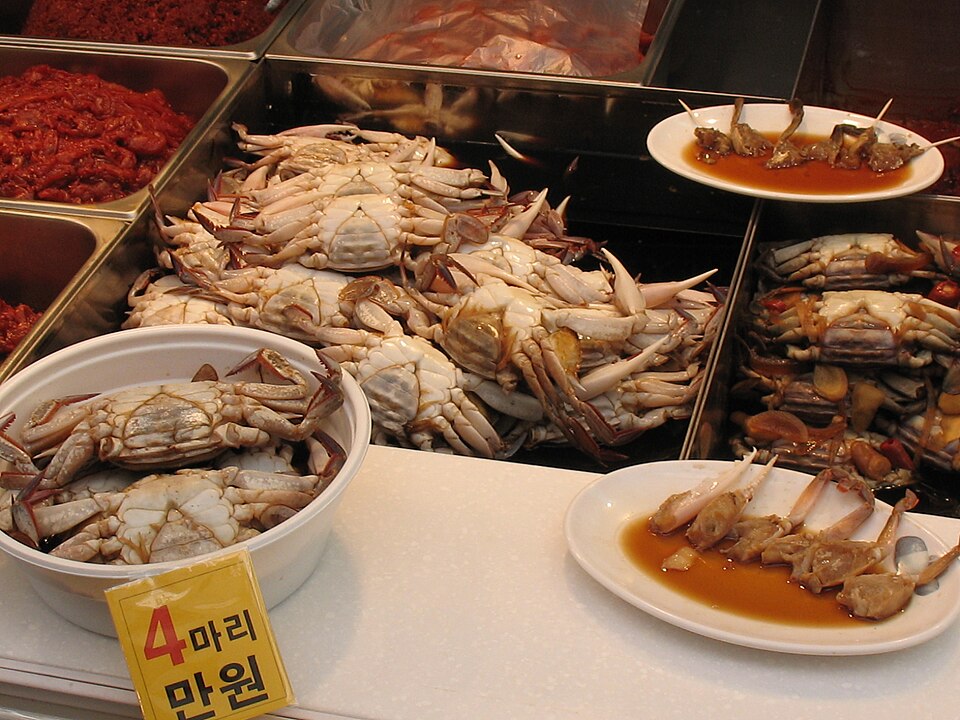
Ganjang gejang is raw crab cured in a soy sauce brine. Korea Tourism Organization (KTO) notes it is made with blue crabs, which are in season from April to June and again from October to November, so right now is a good window. Koreans nickname it the “rice thief” because you keep eating rice to go with it. KTO describes the standard way to eat it: put a spoonful or two of steamed rice into the crab shell and mix it with the yellow innards. For fresh blue crab from Incheon waters, KTO points to the Incheon Complex Fish Market (37 Yeonanbudu-ro 33beon-gil, Jung-gu, Incheon).
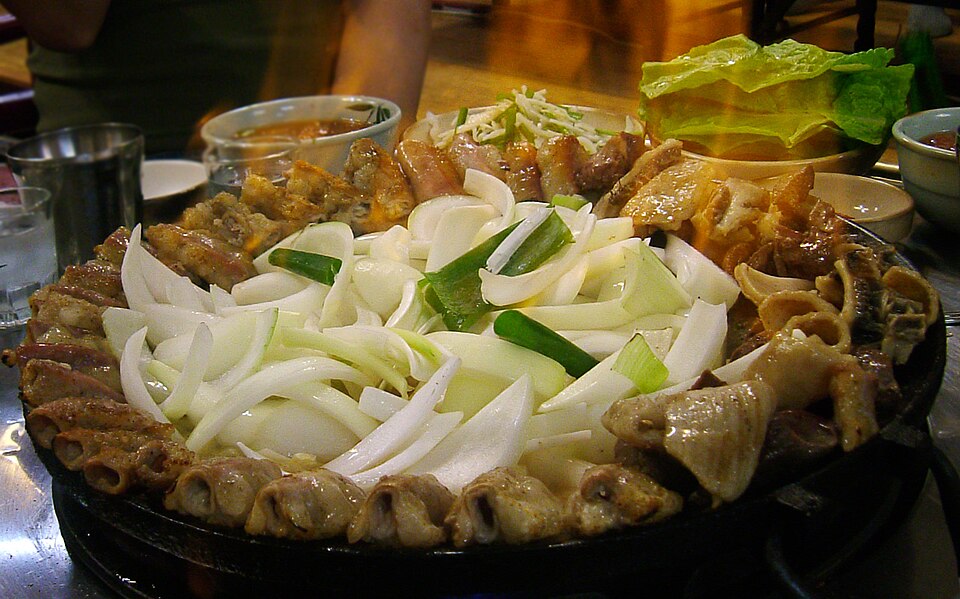
Gopchang means small intestines, usually beef, or the large intestines of pigs, depending on the restaurant. It can be grilled, stir-fried or simmered in a hot pot. The appeal is the fatty, chewy texture and the char from the grill, which is why gopchang places are loud, smoky and busy in the evening. If you are unsure, start with a grilled beef small intestine plate, which is the headline dish at specialist restaurants such as the Seoul gopchang house KTO lists in Gangseo-gu (open 16:00 to 24:00).
Hoe is sliced raw fish, normally eaten with lettuce, garlic, chili paste and soju. For a market where you pick the fish yourself and eat upstairs, see our Noryangjin Fish Market guide.
The dish he misses most: kimchi jjim
The food Jay misses most when away is a good kimchi-jjim, the braised version of kimchi and pork. In Vietnam he soothes the craving with kimchi-jjigae instead. This is a useful distinction for visitors. KTO describes kimchi jjigae as a stew of aged, sour kimchi (more than six months old) boiled with large chunks of pork, and the longer it simmers, the richer it tastes. Jjim, in KTO’s general guide to Korean cooking, is the category of dishes cooked with seasonings in a small amount of liquid or steamed, so it comes out thicker and more concentrated than a stew.
Practical point: menus in English often list only “kimchi stew”. If you see a pot of braised kimchi with pork at the table, ask for kimchi-jjim (김치찜) and say it with the word for “one portion”, il-in-bun (일인분), only if the shop serves single portions. Many jjim places have a two-person minimum.
What he orders for foreign friends
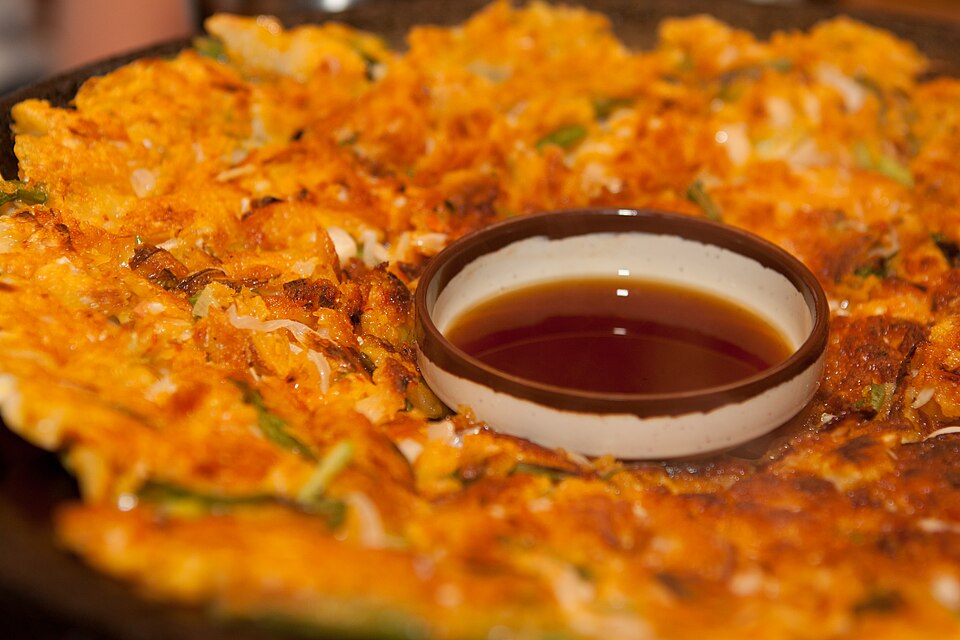
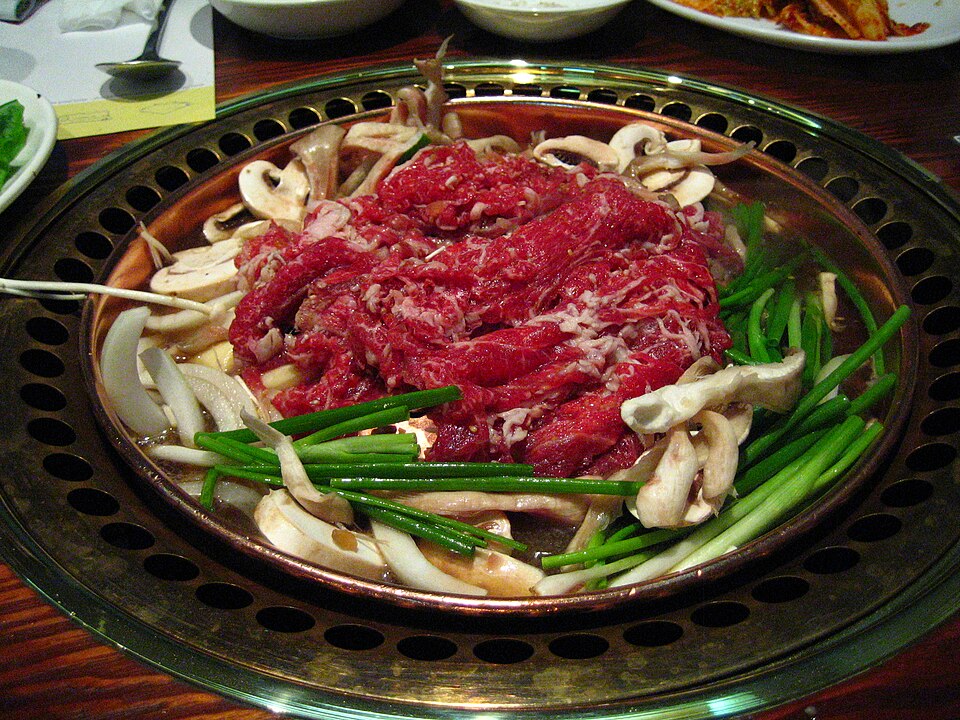
Not the raw or offal dishes above. For friends from abroad Jay orders bulgogi and haemul pajeon. It is a smart pair for beginners: sweet-savory marinated beef that nobody finds scary, plus a crispy seafood and scallion pancake to share.
Your first-week order, by comfort level
| Your comfort level | Order this first | Why |
|---|---|---|
| Cautious eater | Bulgogi + haemul pajeon | The pair a Korean picks for foreign friends. Mild, familiar, easy to share. |
| Likes spice and comfort food | Kimchi jjigae (or kimchi-jjim) | Sour, spicy and filling. Aged kimchi is the point, so expect tang. |
| Wants to eat like a local on a night out | Grilled gopchang | Fatty, chewy and smoky. Best with a group and a cold drink. |
| Seafood lover, October or November | Ganjang gejang | Blue crab is in season in autumn per KTO. Mix rice into the shell. |
Useful Korean for ordering
| Dish | Korean | Say it |
|---|---|---|
| Soy sauce marinated crab | 간장게장 | ganjang-gejang |
| Grilled intestines | 곱창구이 | gopchang-gui |
| Raw fish | 회 | hoe |
| Braised kimchi | 김치찜 | kimchi-jjim |
| Marinated beef | 불고기 | bulgogi |
| Seafood scallion pancake | 해물파전 | haemul-pajeon |
Show the Korean text on your phone if the menu has no English. Prices change often and vary by restaurant, so check the board or ask before ordering market-style seafood.
Info last checked: October 30, 2026 (sources: Korea Tourism Organization / VisitKorea; Wikipedia on gopchang; CNN Travel on Korean dishes). This guide is research-based, and the personal preferences in it are Jay’s own, in his words.
Keep exploring
Gwangjang Market Food Guide · Mangwon Market Food Guide · Noryangjin Fish Market · About SeoulBites
Official reference: VisitKorea on ganjanggejang


Leave a Reply