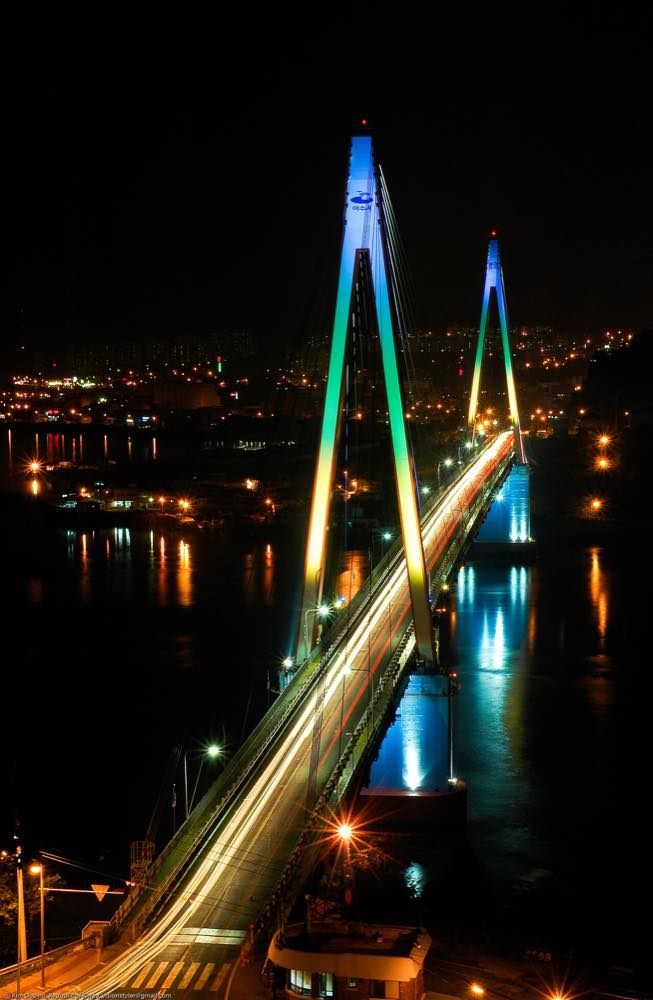
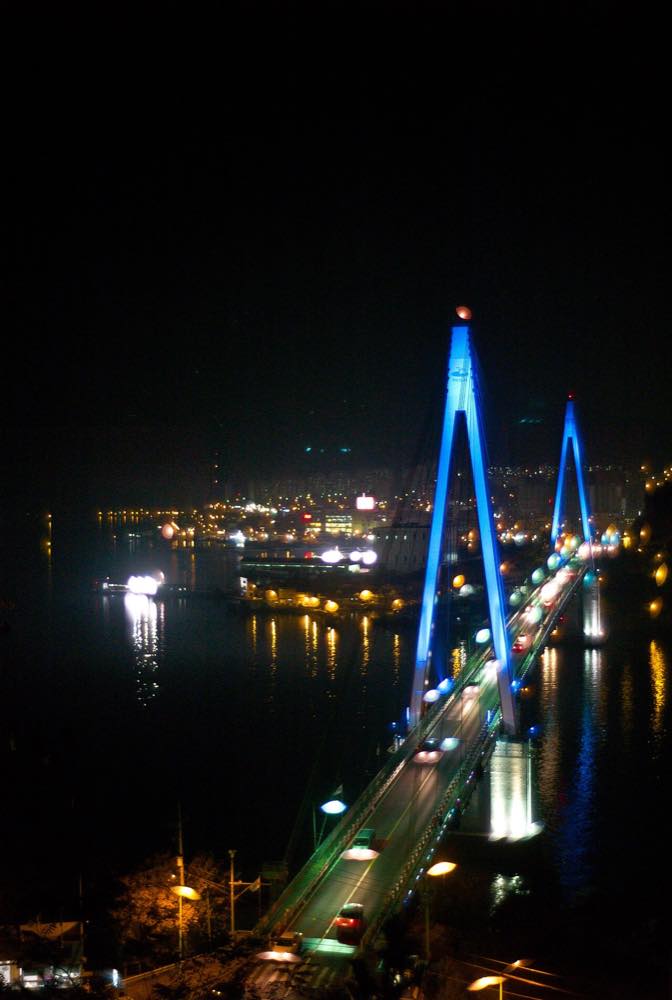
If you’ve heard the Korean song “Yeosu Night Sea” (여수 밤바다) playing in a cafe or on a K-drama soundtrack, you’ve already been introduced to this romantic port city on Korea’s southern coast, even if you didn’t know it. Yeosu built its entire identity around its glittering nighttime harbor, and nowhere is that more delicious than at Nangman Pocha Street, a strip of tented food carts serving fresh seafood right on the water. This guide walks through exactly what to eat in Yeosu, from the city’s signature octopus hot pot to its famous soy sauce marinated crab, plus one real K-drama filming spot you can visit between meals.
Nangman Pocha Street: Yeosu’s Legendary Night Market
Nangman Pocha Street (낭만포차거리), which translates to “Romantic Cart Bars Street,” runs along the water underneath Yeosu’s Geobukseon Bridge, right by the Hamel Lighthouse. Around 18 orange tent stalls set up here every evening, selling fresh seafood dishes while buskers perform against the backdrop of the glittering harbor that inspired Busker Busker’s hit song “Yeosu Night Sea.” It’s popular enough that it was featured on the variety show “Dancing Queens on the Road.” Most stalls open around 6pm and run past midnight (a bit earlier, 5pm, in winter), and nearly every one requires you to order at least one shareable main dish rather than just a snack, so it’s best enjoyed with a friend or two.
Dolmuneoh Samhap: The Dish You Have to Try First
Dolmuneoh samhap (돌문어 삼합) is the dish locals point to first when you ask what makes Yeosu’s food scene special. It’s a large iron-pan hot pot piled with whole baby octopus, samgyeopsal pork belly, mushrooms, bean sprouts, kimchi, and rice cake, all cooked together at your table until the octopus turns tender and everything soaks up the spicy-sweet sauce. A well-known stall for it is Yeosu Nangman Pocha 100 (여수낭만포차 100도) on Nangman Pocha Street itself. Because portions are huge and meant for sharing, it’s a great first order if you’re dining with at least one other person.
Octopus Seafood Ramen and Stir-Fry: The Everyday Favorites
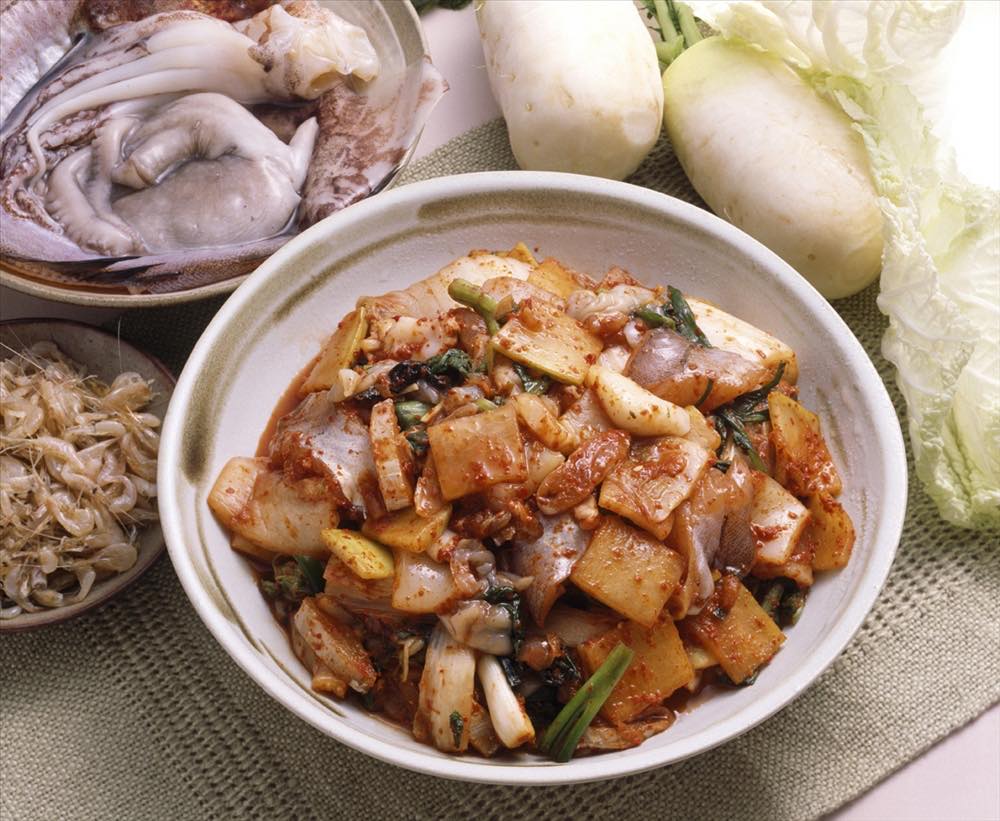
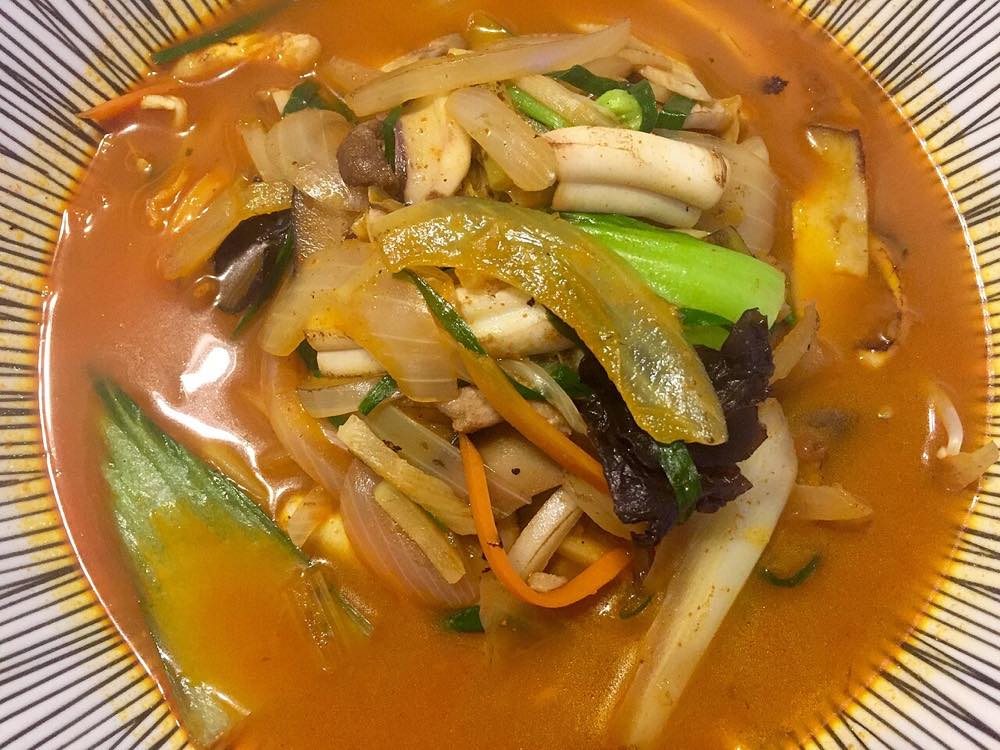
Because octopus is so abundant along this coast, octopus seafood ramen (돌문어 해물 라면) shows up on nearly every pocha menu as a lighter, cheaper alternative to the samhap hot pot, usually listed as a side dish even though the portion is generous. At a stall called Annyeong Yeosu (안녕! 여수), also on Nangman Pocha Street, you can also order octopus and pork belly stir-fry, tossed with bean sprouts, peppers, fish cake, and melted mozzarella. Both dishes are milder and easier for first-time visitors than the fermented dishes Jeolla province is famous for.
Ganjang Gejang: Yeosu’s Soy Sauce Crab Specialty
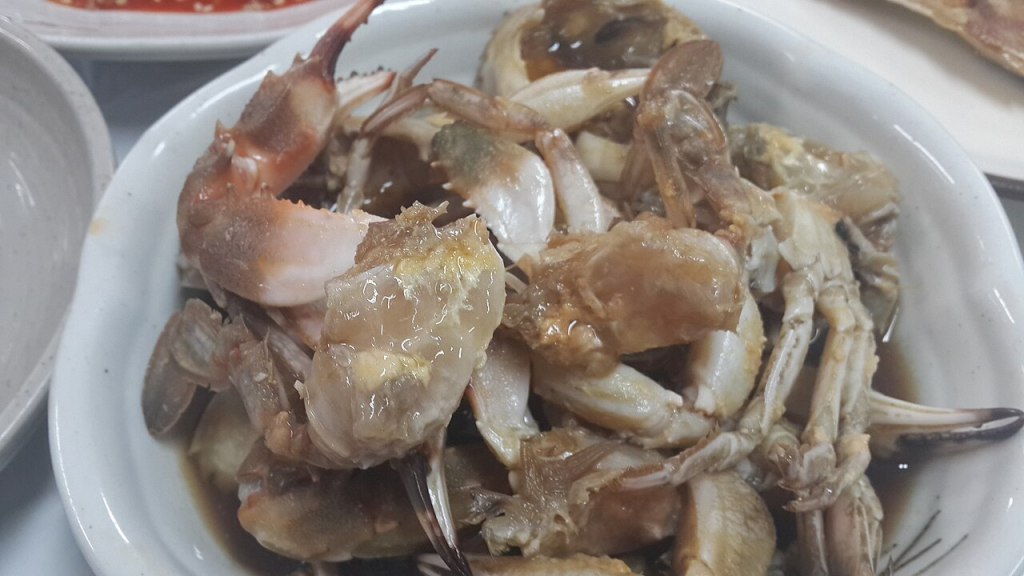
Ganjang gejang (간장게장), raw crab marinated in soy sauce, is a dish Koreans travel to Yeosu specifically to eat, and locals will tell you the version here rivals Seoul’s more famous (and pricier) restaurants. A well-regarded spot is Kkottol Gejang 1beonga (꽃돌게장 1번가), where the crab comes with the roe still rich and the meat easy to suck straight from the shell, alongside a spread of banchan side dishes. It’s an acquired texture for some first-timers, but if you only try one Yeosu specialty beyond the pocha street, this is the one locals recommend.
Bonus: Aqua Planet Yeosu, a Real Legend of the Blue Sea Filming Spot
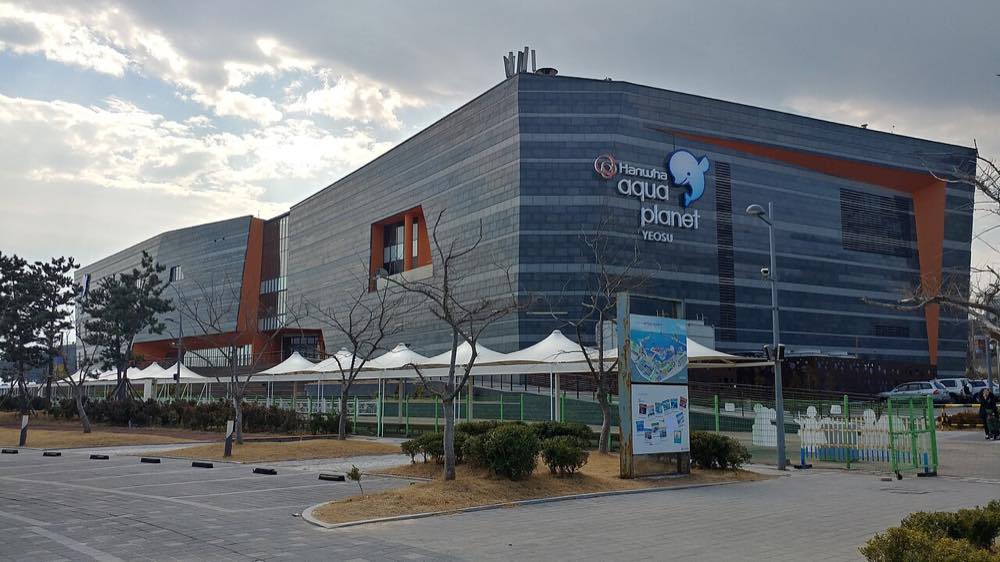
If you’re traveling with fellow K-drama fans, save room in your itinerary for Aqua Planet Yeosu, the large aquarium built during the 2012 Yeosu Expo near Odongdo Island. Multiple scenes of the hit 2016 drama Legend of the Blue Sea, starring Lee Min-ho and Jun Ji-hyun, were filmed at the Expo grounds and this aquarium. It’s an easy walk from Yeosu Expo Station, making it simple to combine with a seafood lunch before your evening at Nangman Pocha Street.
FAQ: Planning Your Yeosu Food Trip
How do I get to Yeosu from Seoul?
Yeosu is easiest to reach by KTX high-speed train from Seoul (Yongsan or Seoul Station) to Yeosu Expo Station, taking about 3 hours. Flights and intercity buses are also available, but the train is the most comfortable option for a weekend trip.
Is Nangman Pocha Street expensive?
It can add up if you order freely, since most stalls require at least one main dish per table, typically 20,000 to 40,000 won for a shareable seafood dish. It’s not a snack-and-go street, but splitting a dish or two between friends keeps it reasonable.
Is Yeosu worth a weekend trip from Seoul?
Yes, especially if you like seafood and coastal night views. Most visitors treat it as a one-to-two night trip, arriving by early afternoon to explore Odongdo Island or Aqua Planet before spending the evening at Nangman Pocha Street.
What is the best time of year to visit Yeosu?
Spring and fall offer the most comfortable weather for walking around the harbor, while summer brings warm evenings that suit Nangman Pocha Street’s outdoor tented seating especially well. Winter stalls open a bit earlier, around 5pm, since it gets dark sooner.
Yeosu rewards travelers who slow down for a night or two: watch the harbor lights come on, order more seafood than you think you need, and let a busker’s version of “Yeosu Night Sea” remind you why locals call this their most romantic city. Between the pocha street, the soy sauce crab, and one real drama filming spot, it’s an easy add-on to any Korea itinerary that goes beyond Seoul.
Learn more about SeoulBites and how we pick every recommendation.
See the Korea Tourism Organization’s official guide to Yeosu’s Romantic Cart Bars.


댓글 남기기