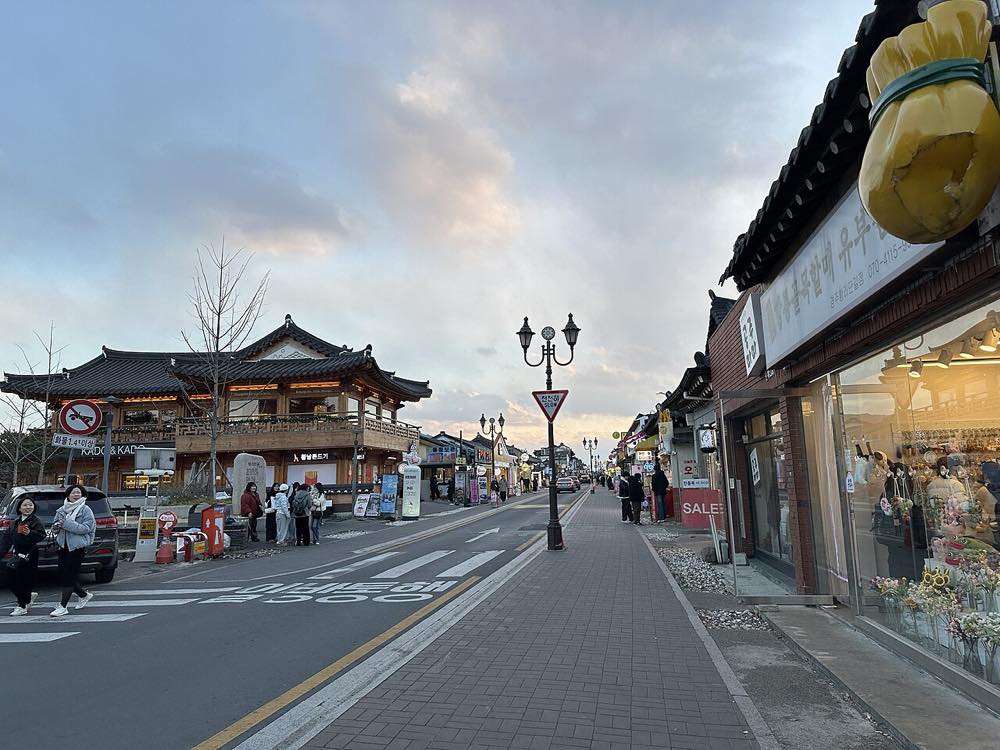
What to eat in Gyeongju starts with one street: Hwangnidan-gil, a hanok-lined lane in the heart of Korea’s ancient Silla capital where 1,300-year-old royal tombs sit right next to trendy cafes and century-old bakeries. Unlike Seoul’s fast-changing food scene, Gyeongju’s most famous bites have real staying power. One bakery has been selling the exact same red bean pastry since 1939, and it recently made international headlines when a visiting head of state praised it in person. If you’re planning a Gyeongju day trip, here are four real, still-operating foods worth building your afternoon around.
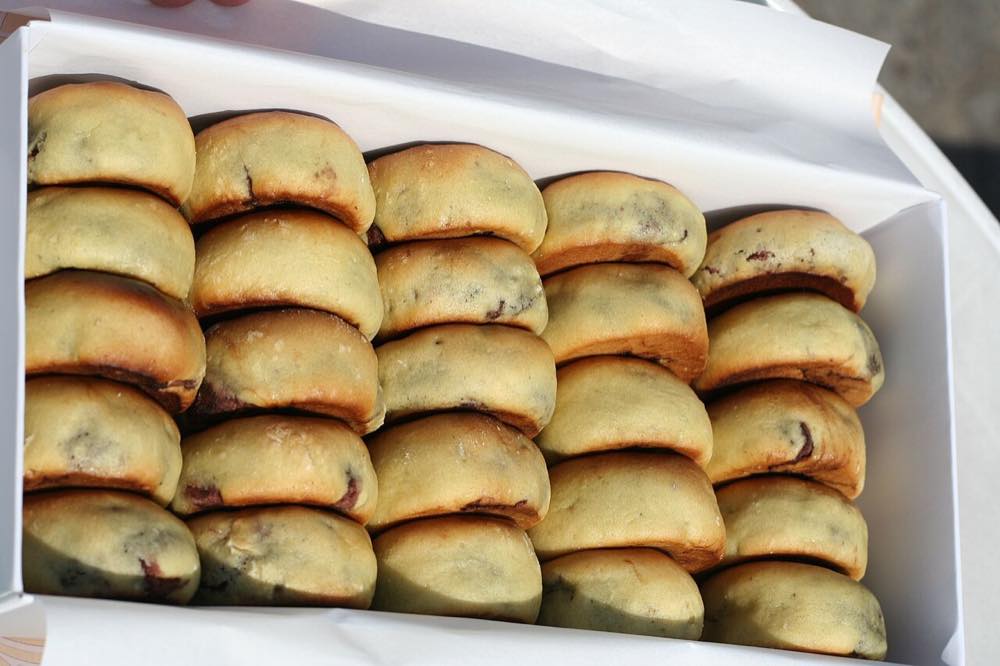
Hwangnam-ppang: Gyeongju’s 86-Year-Old Red Bean Bread
Hwangnam-ppang (황남빵) has been made in Gyeongju’s Hwangnam-dong neighborhood since 1939, when a 21-year-old named Choi Yeong-hwa perfected a small red bean pastry stamped with a delicate chrysanthemum pattern inspired by Silla-era design. His grandson, Choi Jinhwan, still runs the original bakery today using the same recipe. In October 2025, the pastry made international news when Chinese President Xi Jinping told South Korean President Lee Jae Myung how much he enjoyed it during an APEC summit visit to Gyeongju, a small moment that captures just how deeply this bread is woven into the city’s identity. You’ll find the original shop in Hwangnam-dong and stalls selling it all along Hwangnidan-gil, usually for around ₩1,000 to ₩2,000 per piece, and it also makes an easy, well-packaged souvenir to bring home.
Sipwon-ppang (10-Won Bread): The Coin-Shaped Snack Invented Right Here
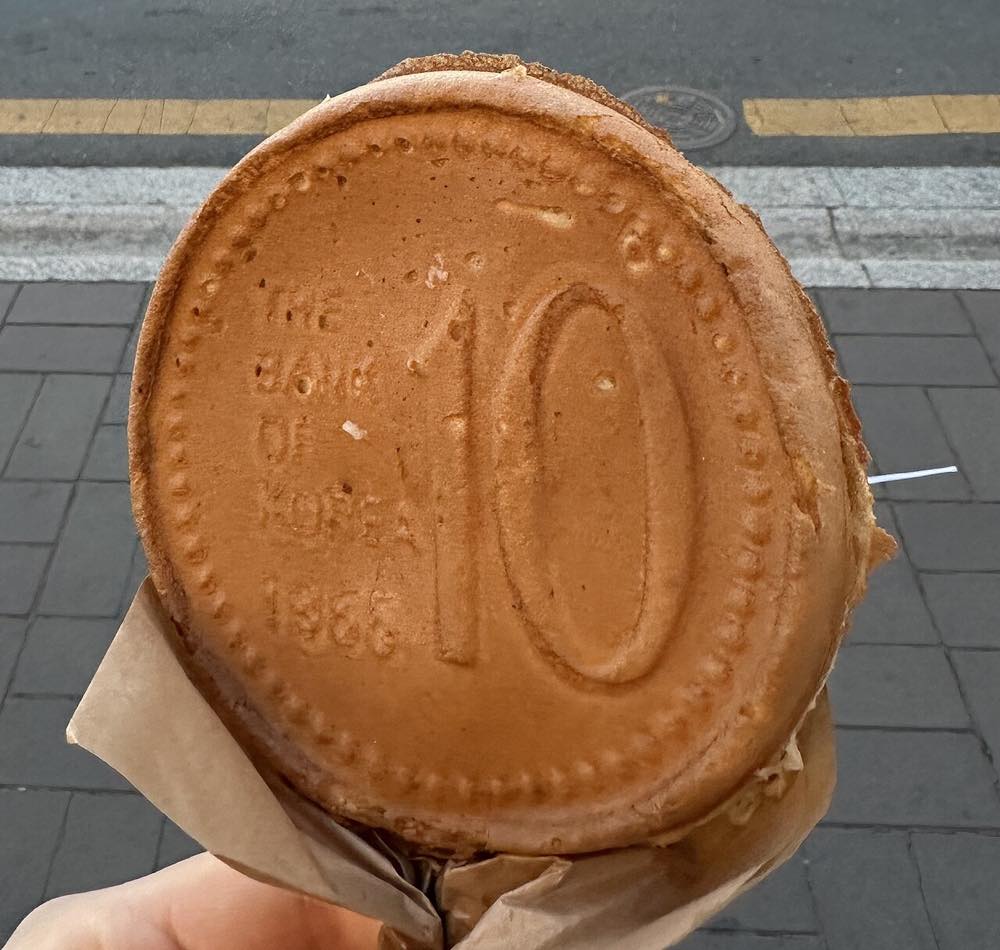
십원빵, or sipwon-ppang, is one of Korea’s most Instagrammed street snacks, and it genuinely started on this exact street. A Gyeongju-based vendor began selling it here in December 2019 under the name “Gyeongju Golden Sipwon Bread,” a castella-style waffle pressed into the shape of Korea’s 10-won coin and filled with stretchy mozzarella cheese. The coin design isn’t random: the real 10-won coin’s reverse side shows the Dabotap pagoda, a genuine national treasure standing at Bulguksa Temple just outside the city. The snack became so popular that the Bank of Korea eventually asked vendors to modify the design so it wouldn’t too closely resemble real currency. Today you’ll see multiple stalls selling it up and down Hwangnidan-gil for about ₩2,000 to ₩3,000 each, cheesy, warm, and worth eating on the spot rather than saving for later.
Ryoko: The Oldest Donkatsu Restaurant on Hwangnidan-gil
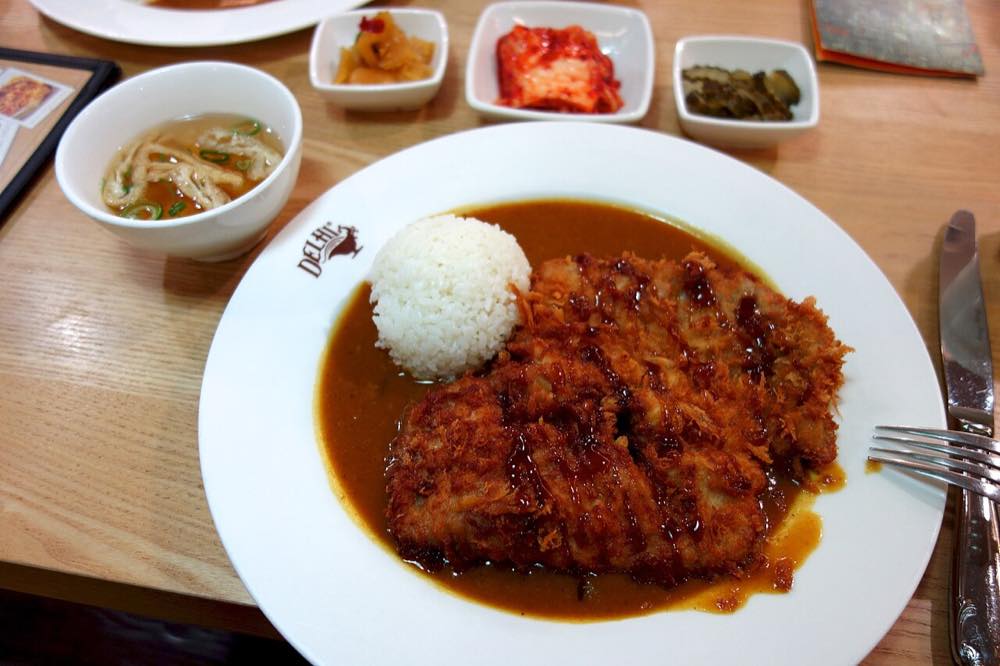
Not every food worth trying on Hwangnidan-gil has to be a photo-op snack. Ryoko, listed on the official Visit Gyeongju tourism site as the oldest pork cutlet (donkatsu) restaurant on the street, has been serving the same Japanese-style comfort food long enough to earn a spot on Korean television, and staff recommend booking ahead if you want a table during peak hours. It’s a good stop for anyone who wants a real sit-down meal between snack breaks, especially on a colder day when a hot cutlet and rice sound better than another cheese-filled coin bread. The restaurant sits at 27 Cheomseong-ro 99beon-gil, a short walk from the main stretch of Hwangnidan-gil and close to Cheomseongdae Observatory.
Sodamru: A Hanok Dessert Cafe Beside a 600-Year-Old Ginkgo Tree
After three rounds of bread and fried food, Sodamru offers a calmer way to end the walk. It’s a traditional hanok dessert cafe, also listed on the official Visit Gyeongju itinerary, set beside a ginkgo tree said to be more than 600 years old inside the city’s old fortress grounds. The signature order is the Sodam Parfait paired with a corn cream latte, a distinctly Korean cafe combination you won’t find at a generic coffee chain. Address is 82 Bonghwang-ro, and it makes a good final stop if you’re pairing your food walk with a visit to nearby Cheomseongdae Observatory or Woljeonggyo Bridge before the sun goes down.
Frequently Asked Questions
How do I get to Hwangnidan-gil from Seoul or Busan?
Gyeongju is about 2 hours from Seoul by KTX, or as little as 20-30 minutes from Busan by KTX plus a short taxi ride. Hwangnidan-gil sits right next to the Daereungwon tomb complex in the historic city center, so most visitors combine both in a single afternoon.
Is Hwangnidan-gil worth visiting if I’m not into K-dramas?
Yes. Most of what’s on this list has nothing to do with filming locations, it’s just genuinely good, historic Korean food in one of the country’s most photogenic neighborhoods, set right next to 1,300-year-old royal tombs you can walk through for free.
How much does a Gyeongju food crawl cost?
Budget snacks like Hwangnam-ppang or sipwon-ppang run about ₩1,000 to ₩3,000 each, while a Ryoko donkatsu set or a Sodamru dessert plate is closer to ₩12,000 to ₩18,000. A relaxed afternoon covering all four spots is easy to do for well under ₩30,000 per person.
Do I need a reservation at Ryoko?
It’s not always required, but the restaurant recommends booking ahead since it’s a small, well-known spot that’s been featured on Korean television. Walk-ins are usually fine on quieter weekday afternoons.
Gyeongju doesn’t need K-drama filming spots to earn a place on your Korea itinerary, its food already tells a thousand-year story on its own terms. From a red bean pastry that impressed a visiting head of state to a coin-shaped snack invented right on this one street, Hwangnidan-gil packs an entire city’s culinary history into a single walkable lane. Pair a bite of Hwangnam-ppang with a walk past the nearby royal tombs and Cheomseongdae Observatory, and it’s easy to see why this stretch of Gyeongju keeps pulling visitors back.
Learn more about how we choose places on our About page.
See the official Hwangnambbang page from the Korea Tourism Organization.


댓글 남기기