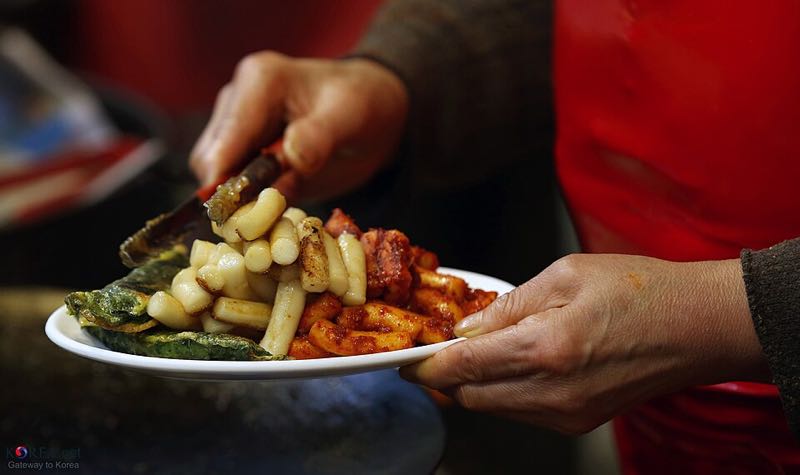
Tongin Market in Seoul is the easiest place to try the city’s famous brass-coin lunchbox, a self-assembled Korean meal you build stall by stall for about 5,000 won. Tucked into the Seochon neighborhood just west of Gyeongbokgung Palace, this 1941-era market is small, friendly and far less crowded than Gwangjang or Namdaemun. If you want to taste fried tteokbokki, crispy chicken and a tray of banchan without ordering in Korean or committing to a full restaurant meal, this is the place. Here is how the coin system works, what to pick, and how to fit it into a palace day.
How the Tongin Market Brass-Coin Lunchbox Works
The “Dosirak Cafe” (lunchbox cafe) sits on the second floor of the Customer Service Center in the middle of the market. You buy a bundle of brass yeopjeon coins, modeled on old Joseon-era currency, and receive an empty tray. Visit Seoul says each coin is worth 500 won and that 10 coins (5,000 won) is enough for one person, while The Korea Herald notes a 10,000 won minimum in 2026 reports, so expect to buy a little more if you are hungry. Unused coins can be refunded.
Then you walk the ground-floor alley and look for stalls with the Dosirak Cafe sign. Most items cost one to three coins. Fill the tray, carry it back upstairs, and eat at the shared tables, where utensils, water and microwaves are available and rice or soup can be added for a coin or two.
What to Put in Your Tray: Gireum Tteokbokki and Market Favorites
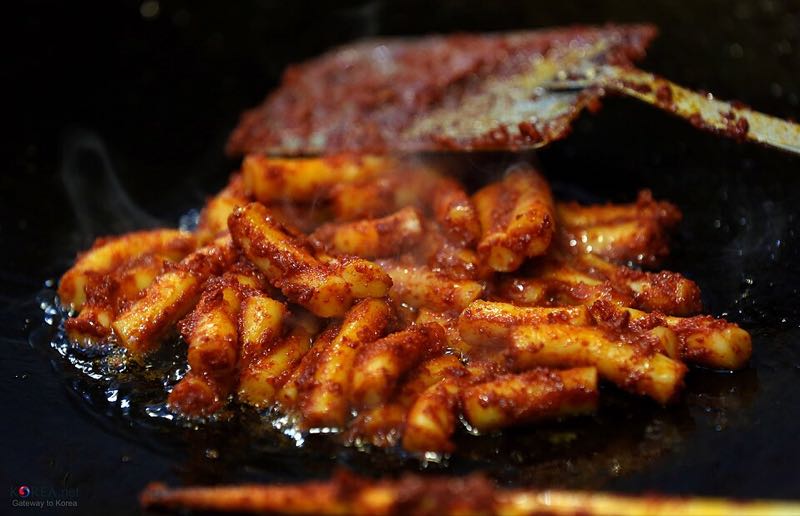
The market’s signature dish is gireum tteokbokki, rice cakes pan-fried in oil and seasoned with soy sauce and chili flakes. It is crispier and less sweet than the gochujang-soaked street version most visitors know, and it is the one thing locals tell first-timers to try. Beyond that, the stalls offer gimbap, jeon pancakes, fried mandu, japchae, tteokgalbi (grilled short rib patties) and dak-kkochi chicken skewers, so you can sample six or seven dishes for the price of one restaurant main.
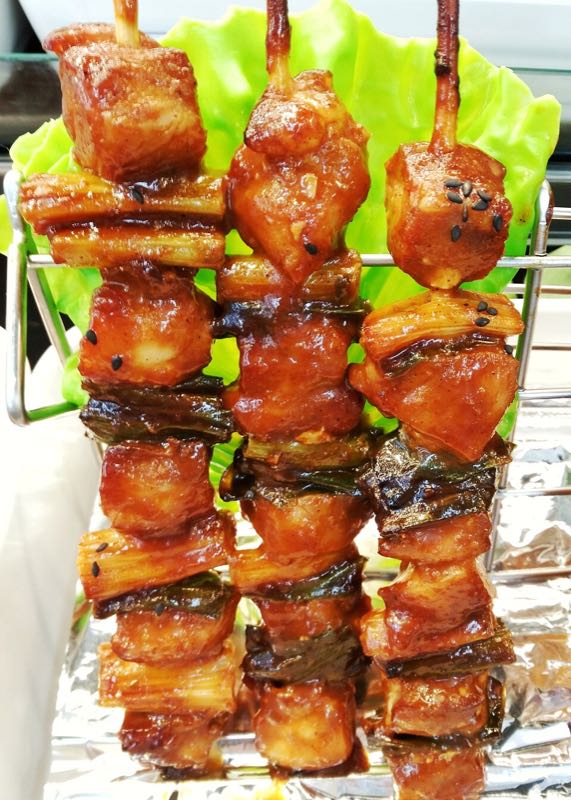
For something more filling, look for the chicken skewers and fried chicken stalls. Sweet-and-spicy fried chicken and charcoal-grilled skewers are market staples, and a coin or two buys a portion that works well as a hot centerpiece for your tray.
How to Get to Tongin Market (and What Else to Do in Seochon)
Tongin Market is at 18 Jahamun-ro 15-gil, Jongno-gu. Take Seoul Subway Line 3 to Gyeongbokgung Station and walk toward the market; Visit Seoul lists Exit 2 and the walk takes roughly 10 minutes. The market is open daily from about 7:00 to 21:00 (stalls vary), but the lunchbox program only runs from around 11:00 to 15:00 on weekdays and 11:00 to 16:00 on weekends, so arrive before the early afternoon.
Seochon itself is worth an hour: independent cafes, small bookstores and quiet hanok lanes make it a good counterpart to the grand palace next door. Pair the lunchbox with a morning at Gyeongbokgung and finish with coffee on a Seochon side street.
Tongin Market FAQ
Is the Tongin Market lunchbox cafe worth it for tourists?
Yes, if you like trying small portions. It is a cheap, low-pressure way to sample several Korean dishes. One travel blogger noted that not every stall takes coins, so variety is a bit limited, but it is still a memorable and affordable experience.
How much does it cost?
Plan on about 5,000 to 10,000 won in coins per person. Each coin is 500 won and most dishes are one to three coins. Unused coins can be refunded, and regular payment is accepted in the rest of the market.
When is Tongin Market closed?
Visit Seoul lists the market as closed on the third Sunday of each month and the Dosirak Cafe as closed on Mondays. Some other guides give a different closure day, so check current hours before you go.
What is gireum tteokbokki?
It is oil-fried tteokbokki, a Tongin Market specialty seasoned with soy sauce and chili flakes rather than the sweeter red gochujang sauce.
Practical tips: bring some cash, go on a weekday before noon to avoid the lunch rush, and check current hours before you leave your hotel. Remember that the coin lunchbox is a short window in the middle of the day, so do not plan it for late afternoon.
Tongin Market is a small, easy introduction to Korean market food, and the brass coins make it fun even if you do not speak Korean. Pair it with Gyeongbokgung Palace and a Seochon cafe stop and you have a relaxed, budget-friendly half day in central Seoul.


댓글 남기기