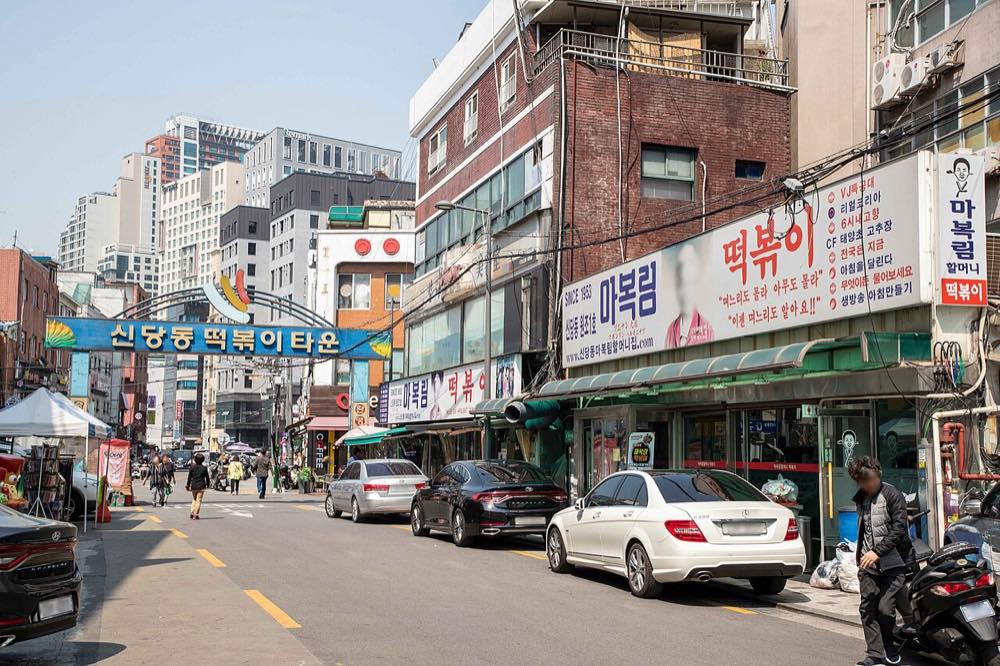
If you’ve ever wondered where Korea’s favorite street food snack actually came from, the answer is a single narrow alley in Seoul’s Jung-gu district: Sindang-dong Tteokbokki Town. This is the real birthplace of modern tteokbokki, the spicy rice cake dish that’s now impossible to avoid on any K-drama or K-pop fan’s Seoul bucket list. In the 1950s, a woman named Ma Bok-rim started selling rice cakes tossed in gochujang near the old Donga Theater, and by the 1980s her gochujang-based recipe had turned this alley into a neon-lit, DJ-booth-equipped teenage hangout that’s still packed with locals and tourists today. Here’s exactly where to go, what to order, and how this one street basically invented a national obsession.
The Birthplace of Modern Tteokbokki
Long before it was a food destination, this neighborhood was known as Seoul’s “Shaman Valley” — a Joseon-era settlement just outside Gwanghuimun, the city gate once used to carry the dead out for burial. The tteokbokki story starts in the early 1950s, when a woman named Ma Bok-rim began selling seasoned rice cakes from a street stall near the old Donga Theater. Legend has it she accidentally dropped a rice cake into a bowl of jajangmyeon (black bean noodles), liked the result, and started experimenting with gochujang instead of soy sauce — inventing the fiery red version of tteokbokki the whole world now knows. By the 1970s and 80s, the alley near what’s now Sindang Station had exploded into a teenage hangout: each restaurant installed its own DJ booth, and students from nearby Duksoo and Sunrin commercial high schools packed the street after baseball games between their two schools. In 2013, the Korean government officially designated the alley a “Food Theme Street,” recognizing just how central it had become to Seoul’s food culture.
Grandma Ma Bok-rim’s Original Tteokbokki
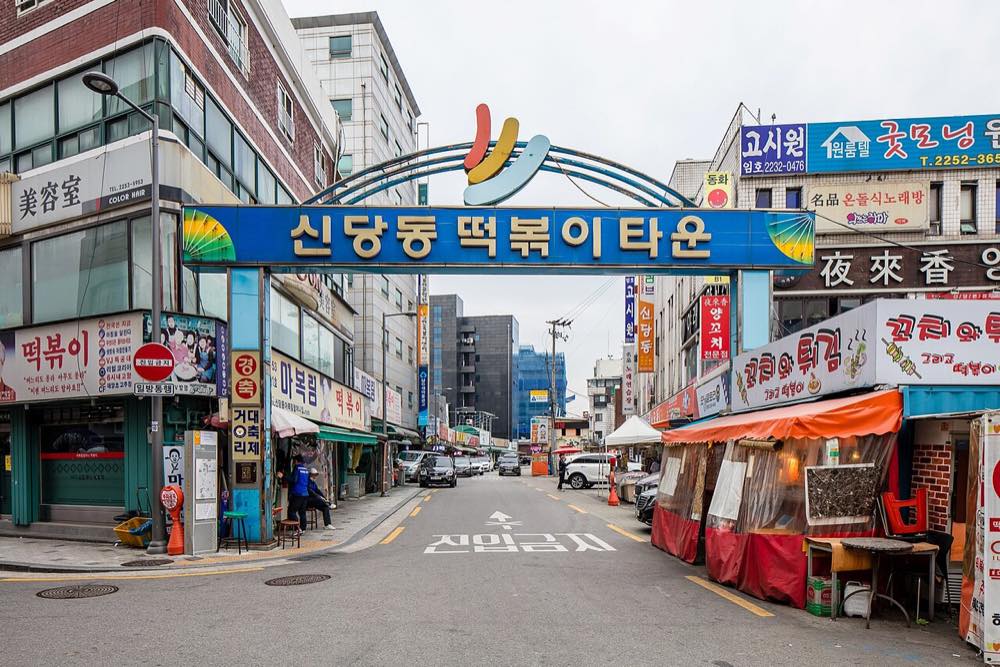
The restaurant most directly tied to the alley’s founder is Mabongnim Halmeoni Tteokbokki (마복림할머니집), run by Ma Bok-rim’s family at 5 Dasan-ro 35-gil, Jung-gu — just a couple of minutes from Sindang Station’s Exit 8. It’s open daily from around 9am to 10:50pm (closed the second and fourth Monday of each month), and it still serves the dish the old-fashioned way: a big communal pot of tteokbokki simmered right at your table, with ramyeon noodles, fish cakes, boiled eggs, and mandu added as you go. Because the sauce is cooked fresh in front of you rather than ladled out of a pre-made batch, the flavor builds as the pot reduces — order it with a side of fried rice (볶음밥) at the end to scrape up everything left in the pan, which is the move regulars never skip.
I Love ShinDangDong: Tableside Tteokbokki Done Right
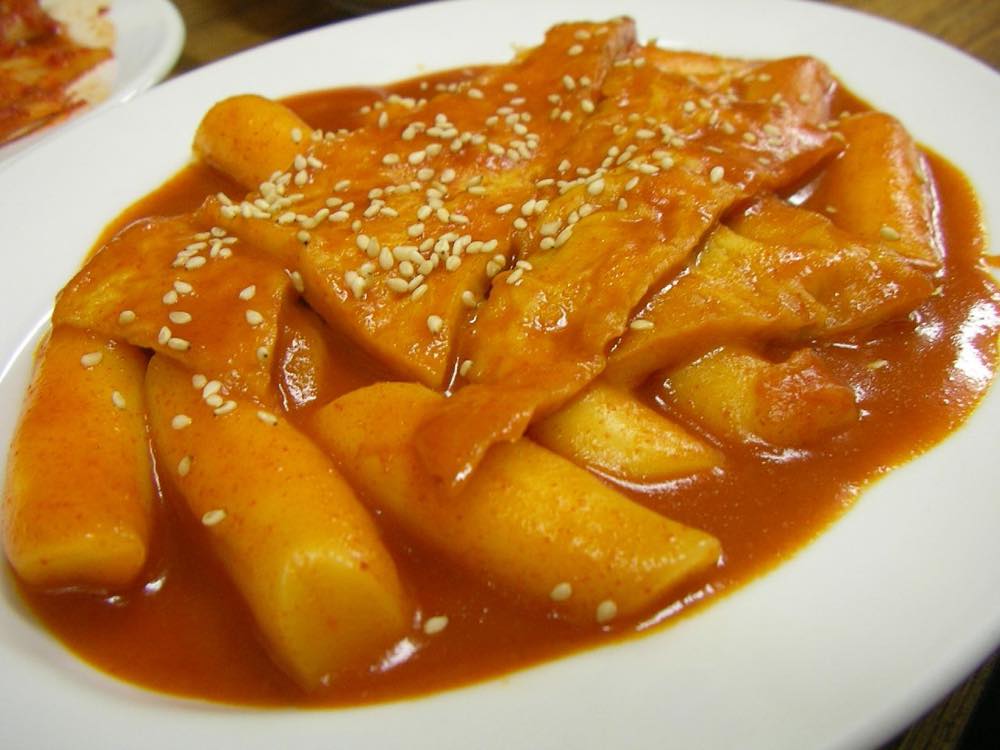
A short walk into the alley from Sindang Station’s exit sits I Love ShinDangDong Tteokbokki (아이러브신당동떡볶이), one of the street’s biggest and most polished operations — a second-generation, family-run spot that formed in 2001 when several of the original stalls merged and modernized. The format here is the same tableside-cooking tradition the alley is known for: tteokbokki, fish cakes, eggs, and mandu simmer together in a shared pot on a portable burner at your table, and you can customize it with cheese, extra ramyeon, or chewy noodles as it cooks. Expect a line on weekend afternoons — this is one of the few restaurants in the alley with a genuine wait — so if you’re visiting with limited time, aim for an off-peak weekday lunch instead.
Getting There and Sindang-dong Today
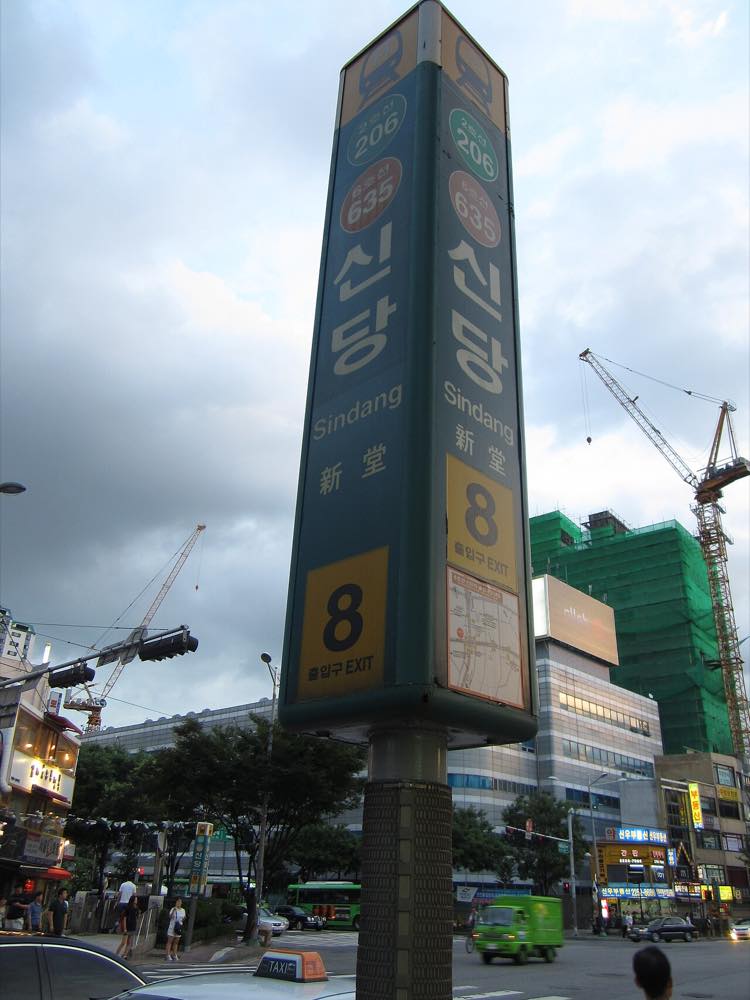
Getting to the alley is simple: take Seoul Metro Line 2 or Line 6 to Sindang Station and leave through Exit 7 or Exit 8 — the alley’s entrance is clearly marked with a lit-up “신당동 떡볶이타운” sign and you’ll reach it on foot in under five minutes. Beyond the food, Sindang-dong itself has quietly become one of Seoul’s more interesting neighborhoods to wander: a 2026 Seoul Museum of History survey traced the area’s roots back to a Joseon-era “Shaman Valley,” and that same mix of old and new now shows up in bars like Zoosindang, a folklore-themed cocktail spot a short walk from the tteokbokki alley, where staff say international visitors now make up roughly 40% of weekday customers. It’s a good reminder that this corner of Jung-gu isn’t a one-dish detour — it rewards an hour or two of actual wandering.
FAQ: Visiting Sindang-dong Tteokbokki Town
When did Sindang-dong become famous for tteokbokki?
The street-stall roots go back to the early 1950s, when Ma Bok-rim started selling gochujang-based rice cakes near the old Donga Theater. The alley didn’t become a famous destination until the 1970s and 80s, when DJ booths and a teenage after-school crowd turned it into a cultural landmark, and the government made it official with a “Food Theme Street” designation in 2013.
Is Sindang-dong Tteokbokki Town touristy, or do locals still go?
Both. Longtime regulars (including grown-up former high schoolers) still come back out of nostalgia, and the alley genuinely gets busy with ordinary Seoul diners on weekends. International visitors have grown a lot in recent years too, but it hasn’t tipped into a tourist-trap-only spot the way some famous food streets have.
Do I need a reservation?
No, these are casual, walk-in restaurants. The busier spots like I Love ShinDangDong can have a short wait at peak lunch and dinner hours, especially on weekends, but you can’t book ahead — just show up and expect to wait 10-30 minutes if it’s crowded.
What else should I eat while I’m in the area?
If you want a change from tteokbokki, several of the alley’s restaurants also serve dakbal (spicy chicken feet) and sundae (Korean blood sausage) as classic late-night pairings. The wider Jung-gu area is also close to Dongdaemun, so you can easily combine your tteokbokki trip with a fashion-market shopping stop afterward.
Sindang-dong Tteokbokki Town is one of the few food destinations in Seoul where the history is just as satisfying as the meal — a single alley that took a 1950s street-stall accident and turned it into a dish the entire country now craves. Whether you go for the full tableside-cooking ritual at Mabongnim Halmeoni’s or I Love ShinDangDong, it’s an easy, affordable add-on to any Seoul itinerary, especially if you’re already near Dongdaemun. Here’s where to find more food-focused Seoul guides and verify the history for yourself.


댓글 남기기