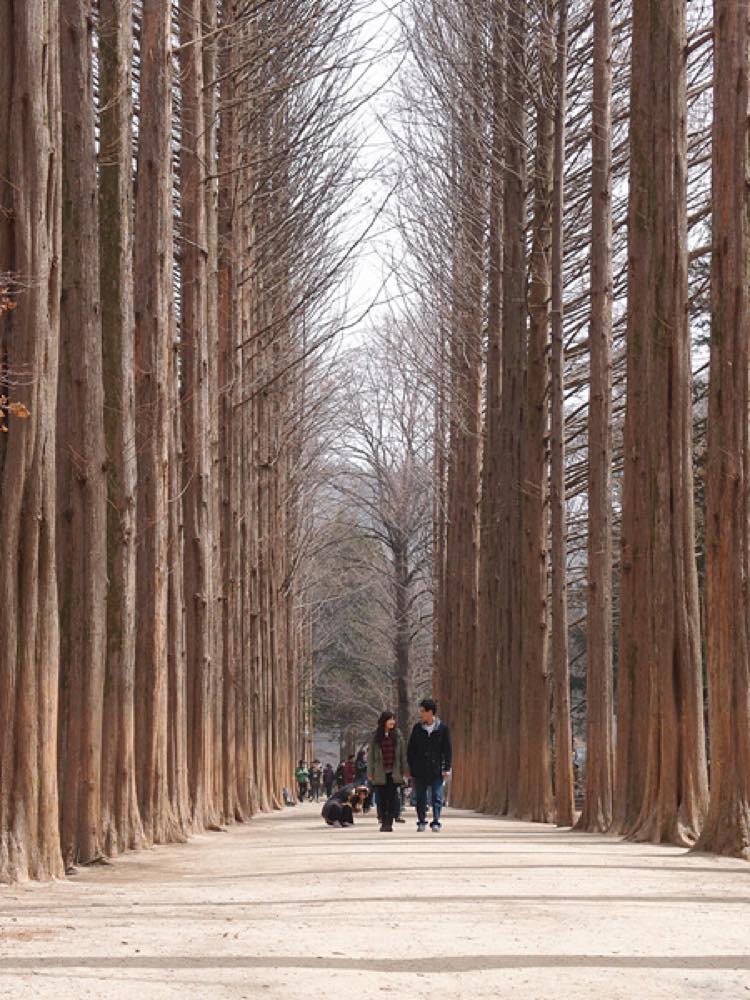
Nami Island (남이섬) near Chuncheon is the real filming location that turned the 2002 K-drama Winter Sonata into a worldwide hallyu phenomenon, and more than two decades later its tree-lined paths are still one of the most-visited day trips from Seoul. But Nami Island is only half the story. Just across the water in Chuncheon, Gangwon Province, an entire downtown alley is devoted to dakgalbi, the spicy stir-fried chicken dish the city invented and still does better than anywhere else in Korea. Here’s how to see the real Winter Sonata scenery and eat like a local, all in one easy day trip.
Nami Island: The Real Winter Sonata Filming Location
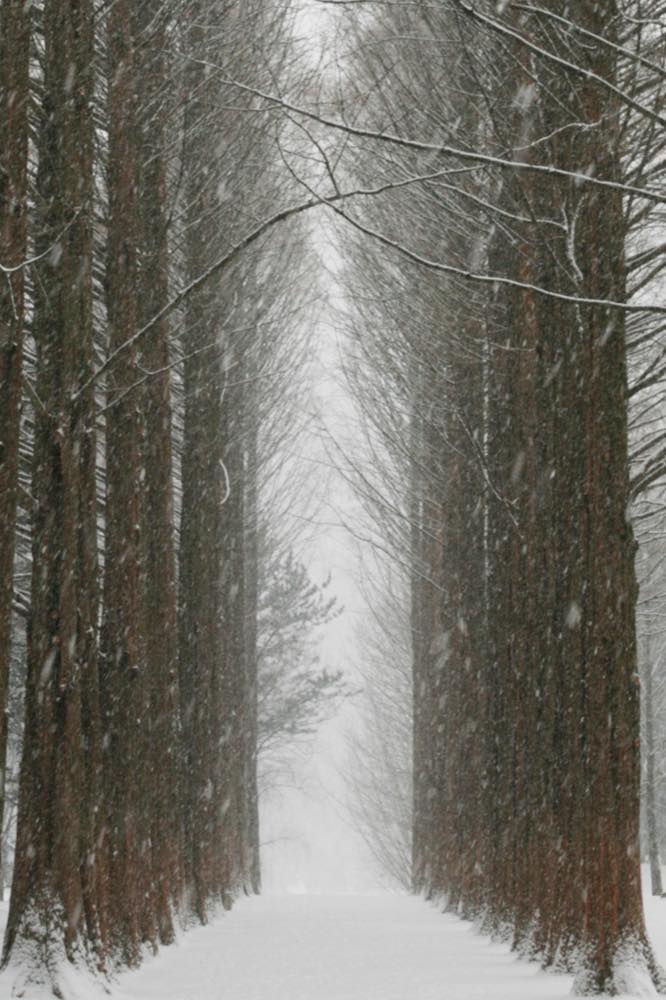
Nami Island (남이섬) is a small, crescent-shaped island in the Bukhan River near Chuncheon, and it became one of Korea’s most-visited tourist sites almost overnight after the 2002 drama Winter Sonata used its tree-lined paths for some of the show’s most iconic scenes. The island’s straight avenue of towering metasequoia trees is the single most photographed spot, instantly recognizable to Winter Sonata fans from Bae Yong-joon and Choi Ji-woo’s walks together, and statues of the two lead characters now stand near a bench that recreates one of the drama’s key moments. The island has no cars: you walk, cycle, or ride a small sightseeing train past galleries, an outdoor sculpture park, and even a small zoo, with different trees taking center stage each season, cherry blossoms in spring, full green canopy in summer, gold metasequoia and ginkgo leaves in autumn, and bare snow-dusted branches in winter.
How to Get to Nami Island and Chuncheon from Seoul
This is one of the easiest day trips out of Seoul. The fastest option is the ITX-Cheongchun express train, which runs from Yongsan or Cheongnyangni Station to Gapyeong or Namchuncheon Station in roughly an hour to an hour and a half; regular commuter subway trains on the same Gyeongchun Line cover the same route more slowly but for a lower fare. From Gapyeong Station, it’s about a 15-minute walk or a short taxi or shuttle-bus ride to the Namiseom ferry dock. Ferries to the island run continuously roughly every 30 minutes from around 7:30am to 9:40pm, and the short 5-to-10-minute crossing is included in the island’s general admission ticket, so you don’t need to buy a separate boat fare. If you’re continuing on to the Myeongdong dakgalbi alley afterward, it’s a short taxi or local bus ride back into central Chuncheon.
Chuncheon Myeongdong Dakgalbi Alley: Korea’s Original Spicy Chicken Street
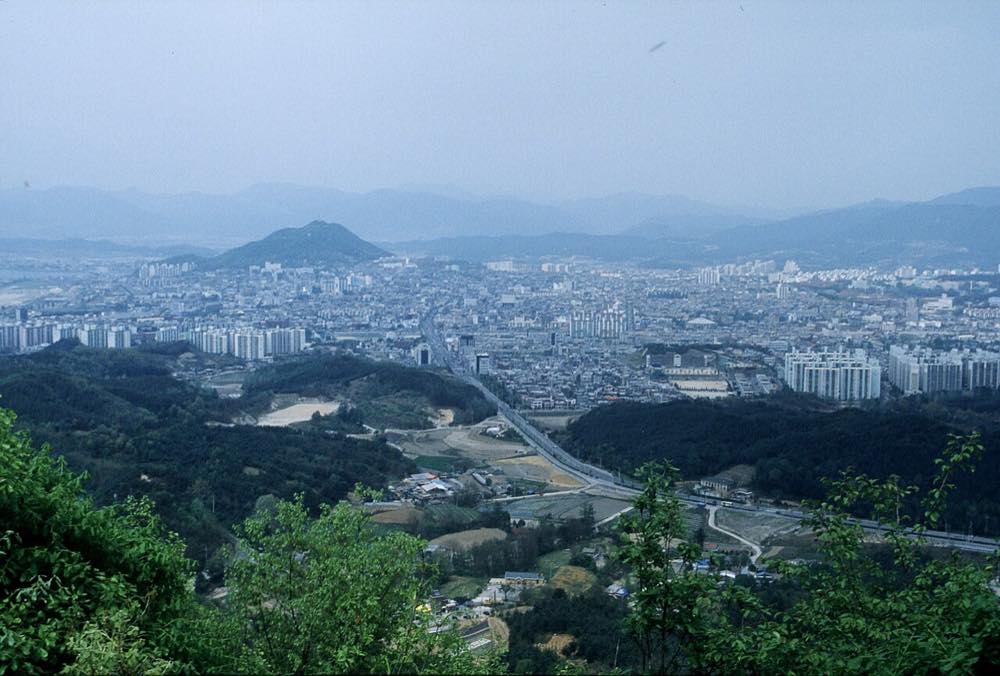
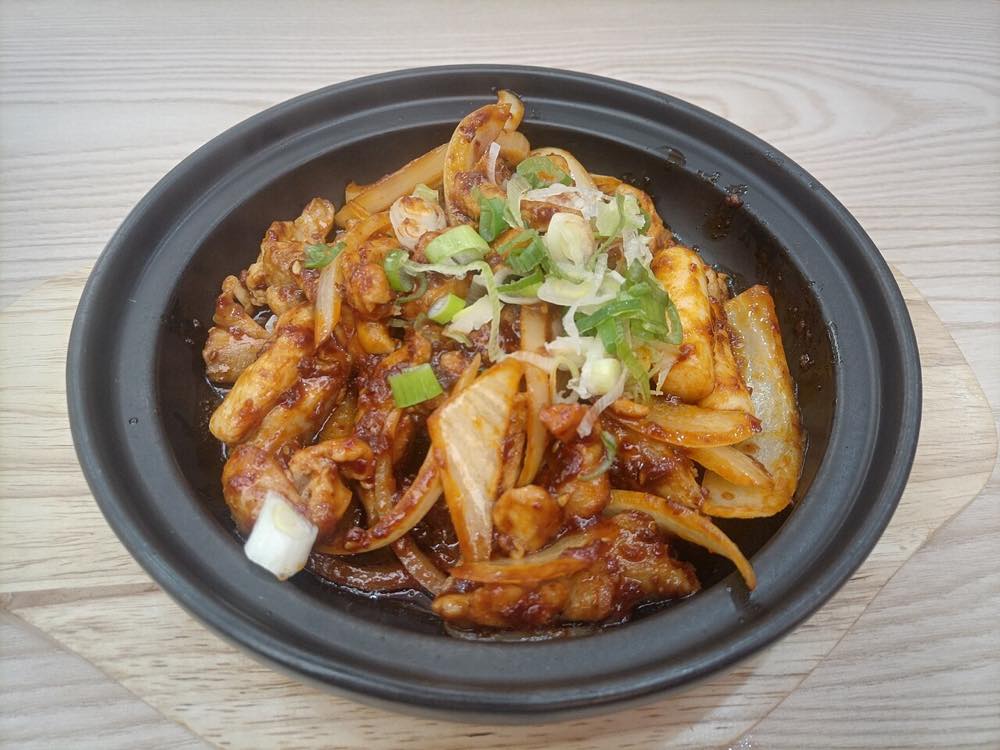
Dakgalbi (닭갈비) is Chuncheon’s defining dish: boneless chicken marinated in a sweet, spicy gochujang sauce and stir-fried at your table on a wide iron griddle with cabbage, sweet potato, rice cake, and perilla leaves. The dish started in the late 1950s and 1960s as a cheap grilled-chicken alternative to pork ribs, and it earned nicknames like seomin galbi (“the common people’s ribs”) because it was filling and affordable for the university students and soldiers who make up much of Chuncheon’s population. Through the 1970s and 1980s, dakgalbi restaurants opened one after another on a backstreet of Chuncheon’s Myeongdong downtown district, and that short, roughly 150-meter alley, officially called the Dakgalbi Golmok, is still packed with dakgalbi houses on both sides today. Well-reviewed spots in and around the alley include Tongnamujib Dakgalbi and 1.5 Dakgalbi, both known for the classic charcoal-and-griddle style with rice cake and cheese add-ins. Order a plate for two (most restaurants have a minimum order), ask for extra rice cake or cheese if you like, and finish with bokkeumbap, fried rice mixed right into the leftover sauce on the same griddle.
Don’t Skip the Makguksu (Cold Buckwheat Noodles)
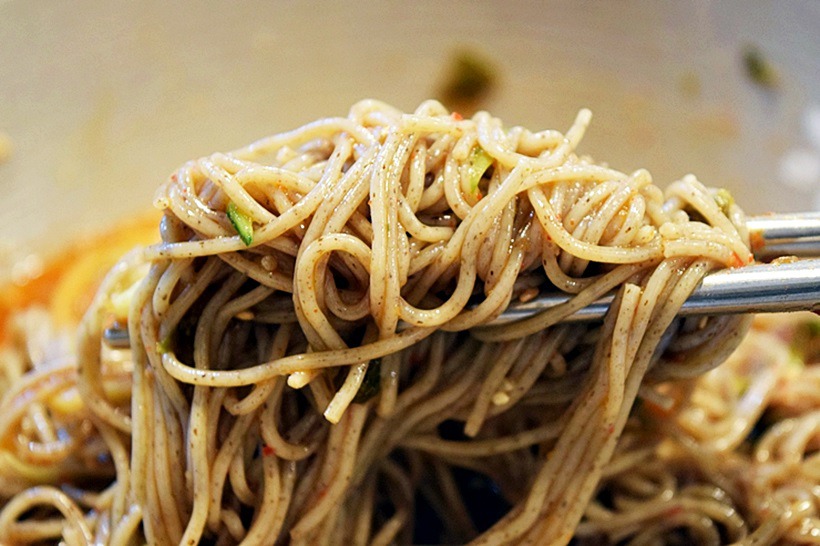
Chuncheon’s second local specialty is easy to skip in the rush toward dakgalbi, but it’s worth ordering alongside your chicken: makguksu (막국수), cold buckwheat noodles tossed in a tangy, slightly sweet vinegar-and-gochujang sauce and topped with sliced cucumber, a boiled egg, and sometimes shredded radish kimchi. Several dakgalbi restaurants in the alley offer it as a side dish, and the pairing genuinely works, the cool, lightly sour noodles balance the heat and richness of the sizzling chicken far better than plain rice does. If you’re moderately sensitive to spice, ordering makguksu alongside your dakgalbi rather than after it gives you something to cool your palate between bites instead of only at the end of the meal.
Frequently Asked Questions
Is Nami Island really the real Winter Sonata filming location?
Yes. Nami Island’s tree-lined paths, including the metasequoia tree avenue, were used as filming locations for the 2002 KBS drama Winter Sonata, and the island has leaned into that legacy ever since with statues of the two lead characters and a bench recreating one of the show’s key scenes.
How long does it take to get from Seoul to Nami Island?
Budget about 1 to 1.5 hours each way. The ITX-Cheongchun train from Yongsan or Cheongnyangni Station to Gapyeong takes roughly an hour, then it’s another 15 to 20 minutes by foot, taxi, or shuttle to the ferry dock, plus a short 5-to-10-minute ferry crossing to the island itself.
Is dakgalbi very spicy?
It’s moderately spicy rather than punishing. The gochujang marinade brings real chili heat, but the sugar, sweet potato, and cabbage round it out, so most people experience it as sweet-and-savory more than fiery. If you’re sensitive to spice, ordering the cold makguksu noodles alongside it helps cool things down.
Can I visit Nami Island and eat dakgalbi in one day trip?
Yes, and it’s the most common way to do it. Most visitors spend two to three hours walking Nami Island, then take a taxi or bus into central Chuncheon for a dakgalbi lunch or dinner in the Myeongdong alley before heading back to Seoul. Weekdays are noticeably calmer than weekends at both the island and the alley.
Nami Island and Chuncheon make one of the most rewarding day trips from Seoul precisely because they pair two very different draws: quiet, photogenic scenery with a real hallyu history, and a loud, delicious food alley that has nothing to do with drama tourism at all. Go early on a weekday if you can, double-check the ferry and restaurant hours before you set out since they can shift seasonally, and don’t just photograph the dakgalbi, order it, sit down, and actually eat like a local before you head back to the city.


댓글 남기기